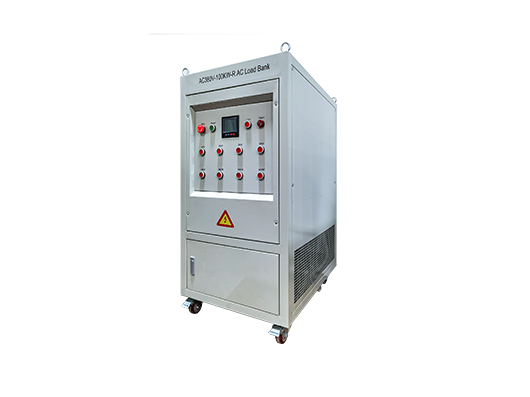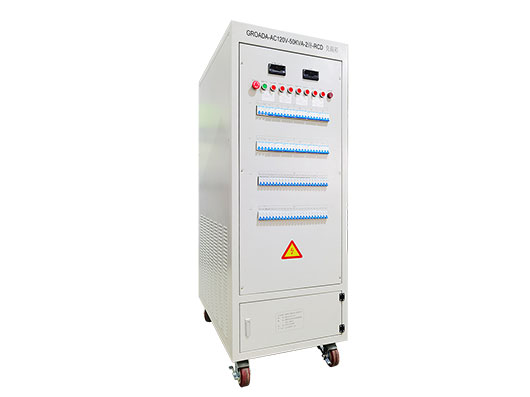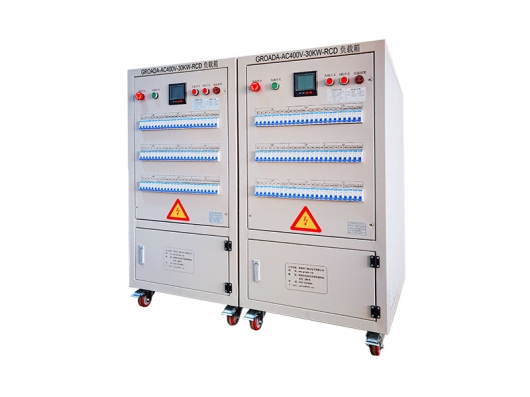
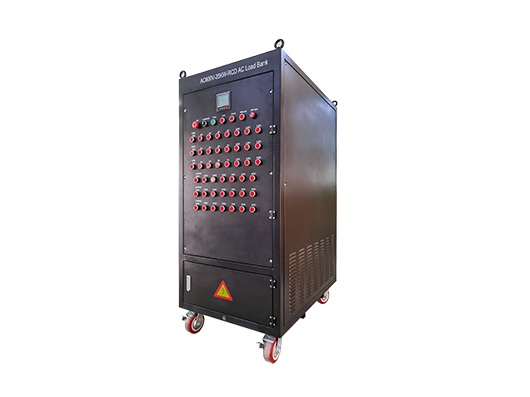
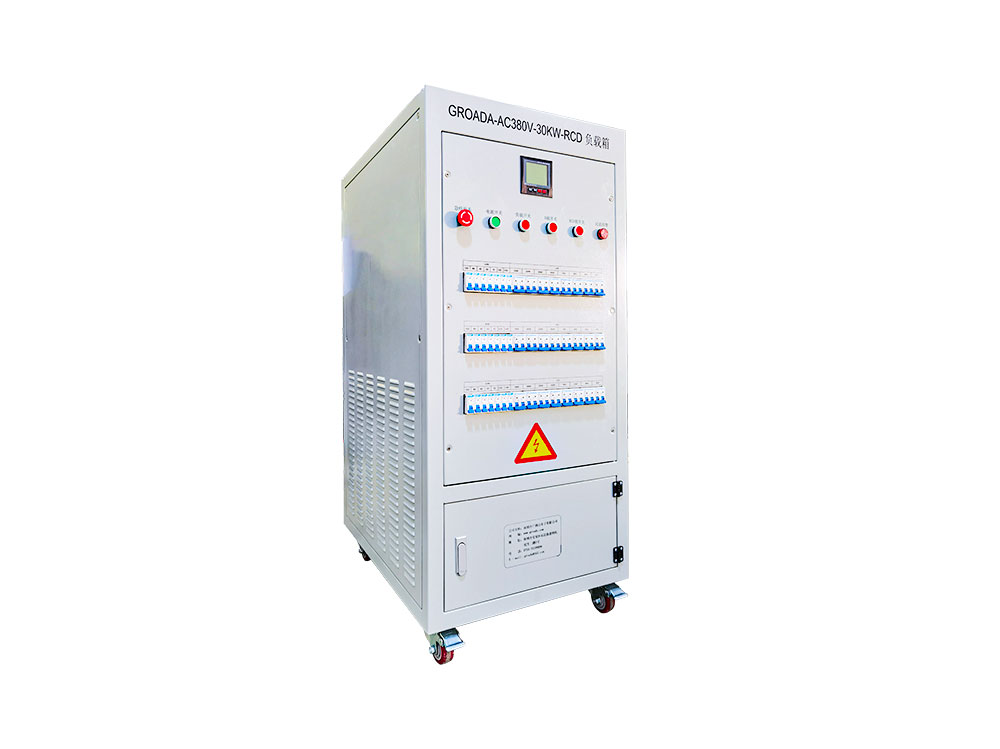
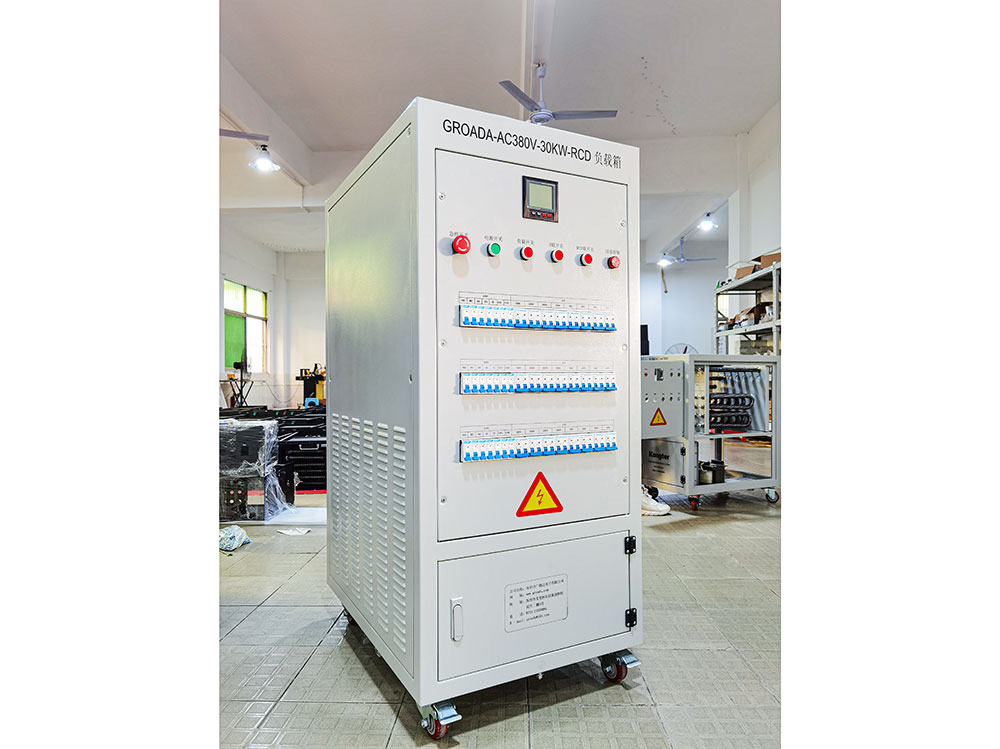
Product images are provided for visual reference. Please confirm the final configuration and specifications with our team.
Industrial Testing Equipment
GROADA-AC380V-30KW-RCD inverter load bank
Explore product details and technical information, or send us your requirements for application guidance and a quotation.
Request Product Information
Tell us what you need. Our team can follow up with product details and quotation information.
Product Overview & Technical Specifications
| Model | AC220V-5KW-RCD | AC220V-10KW-RCD | AC220V-15KW-RCD | AC220V-20KW-RCD | AC380V-30KW-RCD | AC380V-50KW-RCD | AC380V-60KW-RCD | AC380V-100KW-RCD | AC380V-200KW-RCD |
| Rated power | R=5KW | R=10KW | R=15KW | R=20KW | R=30KW | R=50KW | R=60KW | R=100KW | R=200KW |
| RCD=5KVA | RCD=10KVA | RCD=15KVA | RCD=20KVA | RCD=30KVA | RCD=50KVA | RCD=60KVA | RCD=100KVA | RCD=200KVA | |
| Input current | 0-22A | 0-45A | 0-45A | 0-90A | 0-45A | 0-300A | 0-450A | 0-600A | 0-750A |
| Size (width * depth * height mm) | 500*600*800 | 500*600*1000 | 500*600*1100 | 500*750*1100 | 600*850*1400 | 600*850*1600 | 600*850*1850 | 700*1000*1800 | 1100*1400*1800 |
| Weight | 50KG | 80KG | 100KG | 130KG | 200KG | 300KG | 350KG | 450KG | 550KG |
| Input voltage | AC220/230V | AC380/400V | |||||||
| Other input voltage can be customized according to requirements | |||||||||
| Minimum loading | 100W | 100W | 100W | 100W | 100W | 1KW | 1KW | 1KW | 1KW |
| Other minimum loading power can be customized according to requirements | |||||||||
| Overall accuracy | 3% (other accuracy requirements can be customized according to requirements) | ||||||||
| power factor | PF=0.6~1.0 | ||||||||
| peak coefficient | 2 to 3 | ||||||||
| Control mode | Local manual/remote host computer (local manual control mode: circuit breaker/button/touch screen three-way optional, other methods can be customized as required) | ||||||||
| Remote Interface | RS232/RS485/USB/RJ45/CAN/GPIB (other interface modes can be customized according to requirements) | ||||||||
| Protection function | Emergency stop protection, over-temperature protection, fan load interlock protection, grounding protection (select over-voltage protection, over-current protection, short-circuit protection, fan overload, insufficient air volume) | ||||||||
| Working power supply | AC220V | AC220V/AC380V | |||||||
| Display accuracy | 0.5 level (other explicit precision can be customized according to requirements) | ||||||||
| Display parameters | Voltage, current, power, frequency, power factor, etc. (other explicit methods can be customized according to requirements) | ||||||||
| Cold sure way | Side air inlet and upper air outlet (other air outlet methods can be customized according to requirements) | ||||||||
| Protection level | IP20 (other protection level can be customized according to requirements) | ||||||||
| Appearance color | RAL7035 (other colors can be customized according to requirements) | ||||||||
| Working temperature | -10 ℃ ~ 55 ℃ | ||||||||
| Relative humidity | ≤95%RH | ||||||||
| Altitude | ≤ 2500 m | ||||||||
The GROADA-AC380V-30KW-RCD Inverter Load Bank is a specialized testing device designed to simulate real-world electrical loads, enabling comprehensive evaluation of inverter systems' performance. Operating at 380V AC with a 30kW capacity, this load bank is particularly suited for testing inverters used in renewable energy applications, such as solar and wind power systems.
🔌 Product Overview
Model: GROADA-AC380V-30KW-RCD
Type: Inverter Load Bank
Voltage: 380V AC
Power Rating: 30kW
Load Type: RCD (Resistive-Capacitive-Dynamic)
Phase: Three-phase
Control Mode: Manual
Protection Class: IP20
Ambient Temperature Range: -10°C to +50°C
Display Accuracy: ±0.5%
Customization Support: OEM, ODM
⚙️ Key Features
-
High Power Capacity: With a 30kW rating, this load bank is ideal for testing medium to large inverter systems.
-
Wide Voltage Compatibility: Designed for 380V AC systems, commonly used in industrial and commercial applications.
-
Advanced Load Simulation: RCD load type allows for the simulation of various load conditions, providing a comprehensive assessment of inverter performance.
-
Robust Construction: Built with high-quality materials to ensure durability and long-term reliability.
-
User-Friendly Interface: Equipped with intuitive controls and displays for ease of operation.
-
Safety Features: Includes protective mechanisms to ensure safe operation during testing procedures.
⚡ Applications
-
Inverter Testing: Verifies the efficiency and reliability of inverters, ensuring they meet performance standards.
-
Renewable Energy Systems: Assesses the integration of inverters in solar and wind power installations, ensuring optimal energy conversion.
-
Maintenance and Troubleshooting: Identifies potential issues in inverter systems, facilitating timely maintenance and repairs.
-
Compliance Testing: Ensures inverter systems meet industry standards and regulatory requirements.
-
Research and Development: Supports the development of new inverter technologies by providing a controlled testing environment.
✅ Benefits
-
Enhanced Performance Verification: Simulates real-world load conditions to accurately assess inverter performance.
-
Improved System Reliability: Identifies potential issues early, reducing the risk of system failures.
-
Cost Efficiency: Prevents costly repairs and downtime by ensuring systems are thoroughly tested before deployment.
-
Regulatory Compliance: Assists in meeting industry standards and regulatory requirements for inverter systems.
-
Versatility: Suitable for a wide range of applications, from industrial to research settings.
📈 Industry Insights
The global load bank market is experiencing steady growth, driven by the increasing demand for reliable power systems in various industries, including renewable energy, healthcare, and data centers. Load banks play a crucial role in ensuring the performance and reliability of power systems by simulating real-world load conditions during testing procedures. According to industry reports, the load bank market is projected to grow at a compound annual growth rate (CAGR) of 3.7% from 2025 to 2032, reaching a market size of $387.15 million by 2032.
🛠️ Why Choose the GROADA-AC380V-30KW-RCD Inverter Load Bank?
This load bank offers a reliable and efficient solution for testing inverter systems, ensuring they perform optimally under various load conditions. Its robust design, combined with advanced safety features, makes it a valuable tool for professionals in the renewable energy sector and other industries requiring dependable power systems. By accurately simulating real-world load scenarios, it enables comprehensive assessment of inverter performance, facilitating the development of more efficient and reliable power systems.