China Load Bank Tester Factory for Reliable Generator and Power System Testing
Chinese load bank tester factories produce reliable, high-accuracy equipment for generator and power...
Selecting the appropriate load bank is essential for ensuring reliable generator performance, validating power system integrity, and meeting international testing standards. Whether you're conducting factory acceptance tests (FAT), commissioning a new installation, or maintaining existing backup power systems, a properly configured load bank enables accurate simulation of real-world electrical loads under controlled conditions.
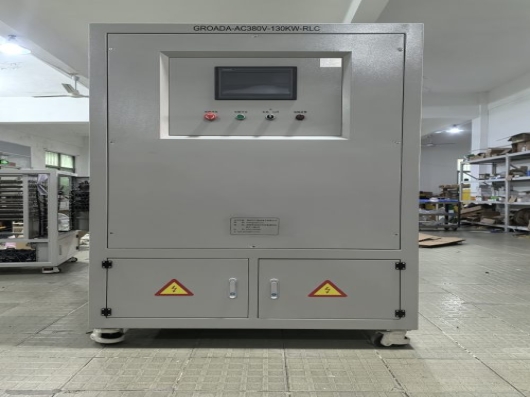
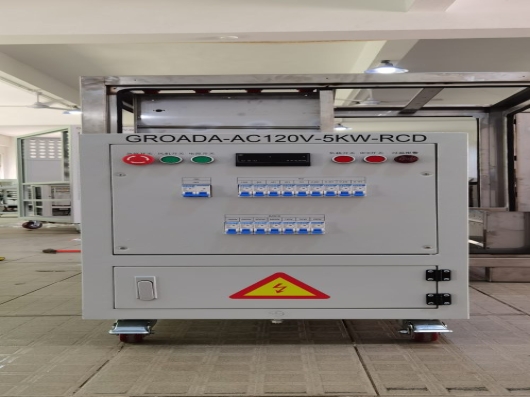
Resistive load banks are the most common type, offering pure resistive loading by converting electrical energy into heat through precision resistor blocks. They are ideal for testing engine cooling, fuel consumption, and alternator output capacity—especially in single-phase or three-phase configurations up to 3000 kVA. Reactive load banks, on the other hand, simulate inductive or capacitive loads using reactors or capacitors, making them critical for evaluating voltage regulation, reactive power handling, and excitation system stability in diesel generators or renewable energy inverters. For comprehensive validation, combination RLC load banks allow dynamic adjustment of power factor between 0.1 lagging to 0.9 leading, enabling full-load performance mapping across varying load types.
Modern load banks integrate advanced control interfaces such as Modbus TCP/IP, RS-485, and Ethernet-based remote monitoring, allowing automated test sequences and data logging for compliance with IEC 60034-1 and IEEE 1159 standards. Safety features like overtemperature protection, emergency stop buttons, and CE/UL-certified grounding ensure safe operation even during prolonged high-load testing. Cooling methods—air-cooled for portable units or water-cooled for stationary applications—must match the thermal dissipation requirements of the rated power (e.g., 200 kW per hour).
A simulated case study from a wind farm project demonstrated that using a 500 kVA three-phase reactive load bank improved grid synchronization accuracy by 17% compared to no-load testing alone. Similarly, an anonymized hospital UPS load test showed a 30% reduction in runtime failures after implementing monthly resistive load testing per IEC 61000-4-30 guidelines. These examples highlight how systematic load testing enhances operational resilience and reduces unplanned downtime.
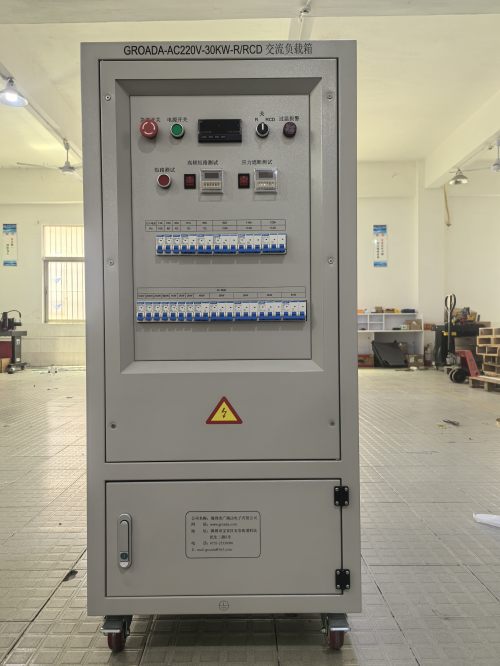
When choosing a load bank, consider key parameters including phase configuration (single or three-phase), maximum current rating, power factor adjustability, portability (IP54-rated chassis with lifting eyes), and calibration intervals (recommended annually). Always verify compliance with local safety regulations such as UL 1008 and EN 61010-1 for electrical equipment used in industrial environments.
 01
01
Chinese load bank tester factories produce reliable, high-accuracy equipment for generator and power...
 02
02
Portable load banks enable accurate generator and UPS performance validation by simulating real-worl...
 03
03
A portable load bank ensures generator reliability by simulating real-world loads for performance va...
 04
04
Portable load banks enable accurate generator performance validation through resistive and reactive ...