Portable Load Bank Testing for Generator and UPS Systems
Portable load banks enable precise testing of generators and UPS systems under simulated real-world ...
Portable load banks are essential tools in the testing, commissioning, and maintenance of electrical power systems such as diesel generators, gas turbines, UPS units, and renewable energy sources like wind farms and solar inverters. These devices simulate real-world electrical loads by drawing power from a source under test—typically a generator or battery system—and allow engineers to verify performance, efficiency, and reliability before full-scale deployment. In modern industrial, commercial, and utility environments, portable load banks offer flexibility, precision, and safety that fixed installations cannot match.
The primary function of any load bank is to provide a controlled resistive, reactive, or combination (RLC) load to test the capacity, stability, and response of a power source under varying conditions. A resistive load bank, for instance, simulates pure resistive loads such as lighting or heating systems. Reactive load banks, on the other hand, simulate inductive (e.g., motors) or capacitive (e.g., capacitor banks) loads, enabling phase angle adjustments crucial for power factor correction studies. Combination load banks integrate both resistive and reactive elements to replicate complex real-world scenarios where multiple types of loads coexist.
For portable applications, especially in field service, construction sites, or remote locations, these systems must be robust, easy to transport, and capable of operating independently without relying on external grid connections. According to IEC 60034-1, which governs the testing of rotating electrical machines including generators, proper load testing ensures mechanical integrity, thermal performance, and long-term operational reliability. Similarly, IEEE Std 115 provides guidelines for generator performance testing, emphasizing the importance of load banking in verifying voltage regulation, frequency control, and transient response—all critical for reliable backup power systems.
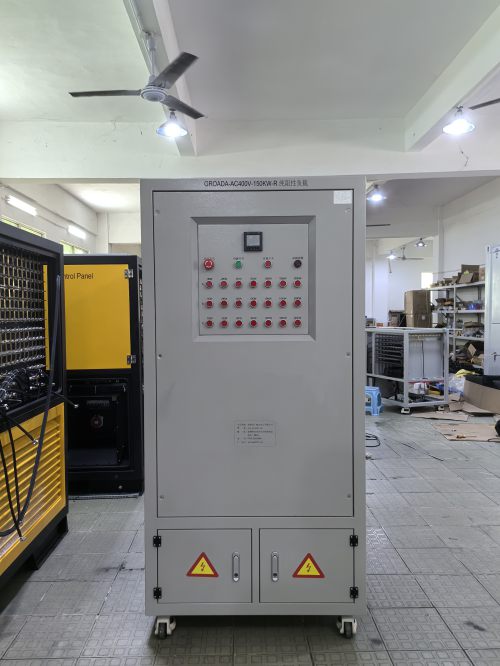
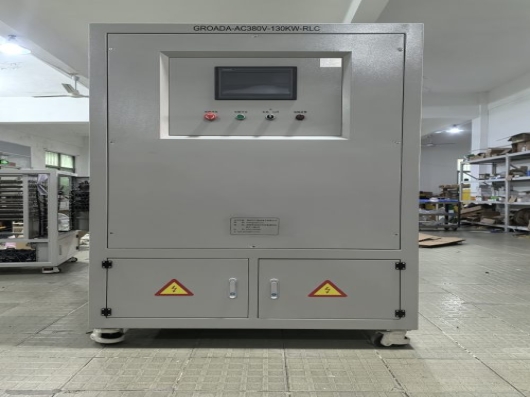
A typical portable load bank includes several key components: resistor blocks (for resistive loading), reactor coils (for reactive loading), cooling systems (air or water-based), control panels with digital displays, and communication interfaces such as Modbus RTU or Ethernet TCP/IP for remote monitoring. Advanced models may feature automatic load stepping, data logging, and integration with SCADA systems for continuous diagnostics. For example, a 200 kW three-phase resistive load bank might have a current range of 300–500 A per phase, operate at voltages from 208 V to 480 V AC, and include built-in overtemperature protection and emergency stop functionality compliant with UL 1598 and CE EN 61010 standards.
In practice, portable load banks serve diverse purposes across industries:
- Generator Factory Acceptance Testing (FAT): Before delivery, manufacturers use load banks to confirm that a generator meets its rated specifications under different load levels (e.g., 25%, 50%, 75%, 100%).
- On-site Commissioning: During installation of new generators at hospitals, data centers, or oil rigs, load testing verifies synchronization capability, governor response, and fuel consumption rates.
- Maintenance Checks: Periodic testing prevents “wet stacking” in diesel engines caused by incomplete combustion due to infrequent operation under full load—a common issue in standby generators.
- Renewable Energy Integration: Wind farms often require dynamic load testing during grid connection to ensure inverters can handle sudden changes in power flow without tripping protective relays.
An anonymized case study from a U.S.-based microgrid project illustrates this application. Engineers used a 150 kVA portable reactive-capacitive load bank to simulate peak demand patterns in a hybrid solar-diesel system. The test ran over 72 hours at variable power factors (0.8 lagging to 0.9 leading). Data collected showed improved voltage regulation when reactive compensation was adjusted dynamically—an outcome directly influencing the final control logic in the system’s energy management software.
Safety remains paramount in all load bank operations. Features such as ground fault detection, short-circuit protection, and thermal shutdown mechanisms are mandatory in professional-grade equipment. Cooling is equally vital; air-cooled systems typically limit output to 200–500 kW, while water-cooled variants can handle up to 2 MW. Mechanical design also matters—chassis should be IP54-rated for dust and splash resistance, with lifting eyes and forklift pockets for safe handling. Weight ranges vary widely: small portable units weigh around 100 kg, while heavy-duty models exceed 1,500 kg.
Calibration and maintenance are often overlooked but critically important. Most manufacturers recommend annual calibration using NIST-traceable instruments to maintain accuracy within ±1% for voltage, current, and power measurements. Consumable parts like resistor blocks degrade over time due to heat cycling and should be inspected every 1,000 operating hours. Fans, if present, may need replacement after 2–3 years depending on usage intensity.
To support global markets, reputable brands ensure their products meet regional certifications: UL (USA), CE (Europe), CCC (China), and ISM (India). This compliance not only enhances trust among buyers but also streamlines import/export processes. Additionally, many modern load banks now support IoT-based remote monitoring via cloud platforms, allowing operators to perform diagnostics from anywhere in the world—a significant advantage in today's distributed energy landscape.
As power systems become increasingly complex—with higher penetration of renewables, smart grids, and hybrid configurations—the role of portable load banks will continue to grow. They are no longer just diagnostic tools but integral parts of predictive maintenance strategies, asset lifecycle management, and regulatory compliance frameworks worldwide.
 01
01
Portable load banks enable precise testing of generators and UPS systems under simulated real-world ...
 02
02
Chinese load bank tester factories produce reliable, high-accuracy equipment for generator and power...
 03
03
Portable load banks enable accurate generator and UPS performance validation by simulating real-worl...
 04
04
A portable load bank ensures generator reliability by simulating real-world loads for performance va...