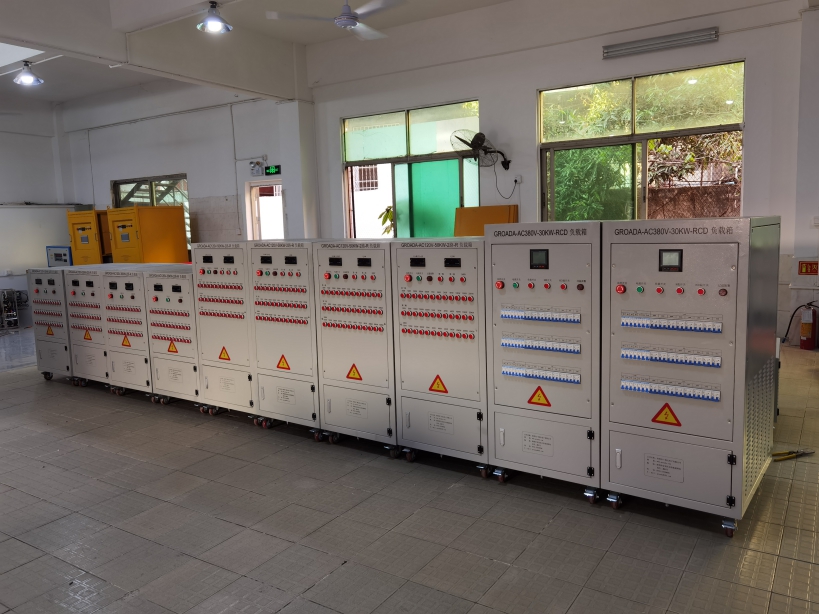
Portable load banks are essential tools for verifying the real-world performance of generators, especially in industrial, commercial, and emergency power systems. These devices simulate electrical loads to test generator output under various conditions—such as full load, partial load, or transient response—ensuring reliability before deployment or during routine maintenance. A well-designed portable load bank typically includes resistive, reactive, or combined RLC (resistance-inductance-capacitance) elements to mimic actual site loads like motors, lighting, or HVAC systems. According to IEC 60034-1, motor and generator testing must include load acceptance procedures to validate thermal and mechanical stability; portable load banks provide a controlled environment to meet these standards. For example, during factory acceptance testing (FAT), engineers apply a 100% rated load for at least one hour while monitoring voltage regulation, frequency stability, and fuel consumption. In an anonymized case study from a hospital backup system, a 500 kW three-phase resistive load bank was used to test a diesel generator over 8 hours, revealing a 3% voltage drop at 75% load—prompting adjustments in AVR settings. Key technical features include modbus communication for remote monitoring, IP54-rated enclosures for dust and splash resistance, and active cooling systems to prevent overheating. Most modern units support both manual and automated control via Ethernet or RS-485 interfaces. Safety is ensured through built-in short-circuit protection, overtemperature shutdowns, and E-stop functionality. When selecting a portable load bank, consider power rating (kW/kVA), phase configuration (single or three-phase), portability (weight< 100 kg for easy transport), and compliance with CE/UL certifications for international use. Proper calibration every 12 months ensures measurement accuracy within ±1%, critical for regulatory compliance and performance benchmarking.