
In modern power systems, ensuring generator reliability under real-world conditions is critical—not only for industrial facilities but also for critical infrastructure such as hospitals, data centers, and renewable energy installations. One of the most effective methods to verify a generator’s performance before commissioning or during routine maintenance is through resistive load bank testing. This process simulates electrical loads that mimic actual operating conditions, allowing engineers to validate output capacity, stability, temperature rise, and protection system response.
A resistive load bank is an electronic device that dissipates electrical power as heat using precision resistor elements. Unlike reactive or capacitive loads, which affect power factor and phase relationships, resistive loads draw current in phase with voltage—producing pure active power (kW). These banks are commonly used in factory acceptance tests (FAT), site acceptance tests (SAT), and preventive maintenance programs across multiple sectors including oil & gas, telecom, mining, and utility grids.
The primary purpose of resistive load testing is to confirm that a generator can handle full-rated load without overheating or failing. According to IEC 60034-1, electric motors and generators must undergo thermal testing to ensure safe operation within specified ambient temperatures and duty cycles. Resistive load banks provide the ideal means to replicate this condition by delivering consistent, measurable resistance across all phases. In our field experience, this type of test has been instrumental in detecting issues like faulty excitation systems, undersized alternators, and inadequate cooling mechanisms long before they lead to catastrophic failures.
For example, in a simulated case study involving a 500 kW diesel generator at a remote telecommunications site, a resistive load bank was used to conduct a 4-hour steady-state test at 100% load. The measured parameters included voltage regulation, frequency stability, exhaust temperature, and coolant flow rate. Initial readings showed a 5% deviation in voltage output under full load—a sign of potential regulator malfunction. After adjusting the automatic voltage regulator (AVR), the same test was repeated successfully, confirming improved performance. Such findings underscore how resistive load testing not only validates equipment but also provides actionable insights for corrective action.
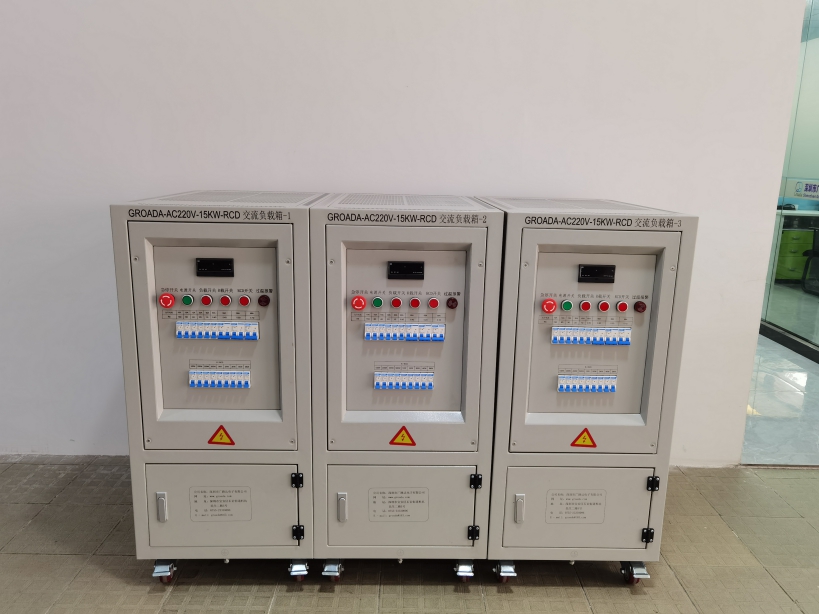
Key technical specifications for resistive load banks include rated power (typically from 10 kW up to several MW), three-phase capability (with neutral connection options), adjustable power factor (often fixed at unity), and robust thermal management systems. Most modern units feature forced-air cooling with high-efficiency fans, while larger models may incorporate water-cooled heat exchangers for extended operation. Cooling design directly impacts operational duration; for instance, air-cooled units typically allow continuous use for 1–4 hours depending on ambient conditions, whereas water-cooled versions support up to 8 hours continuously.
Electrical characteristics such as voltage range (e.g., 230V/400V AC), current rating per phase, and harmonic distortion levels must align with local grid standards (e.g., IEEE 519). Control interfaces vary widely—from manual switches to automated digital controllers via Modbus RTU, CAN bus, or Ethernet protocols. Remote monitoring capabilities enable technicians to log data in real time and trigger alarms if thresholds are exceeded. For instance, many portable load banks now offer cloud-based dashboards accessible via smartphones or tablets, improving accessibility and reducing downtime.
Safety is paramount when conducting load tests. All units should comply with relevant certifications such as CE (Europe), UL (USA), or CCC (China). Essential protections include ground fault detection, overtemperature sensors, emergency stop buttons, and short-circuit protection. Additionally, proper grounding practices must be followed according to IEC 60364 standards to prevent stray currents and equipment damage.
Mechanical durability is another key consideration. Portable units often come in rugged steel enclosures with IP54 or higher ratings for dust and splash resistance. Forklift pockets, lifting eyes, and casters facilitate transport between sites. Weight varies significantly based on size—for example, a 200 kW unit might weigh 600 kg, while a 2 MW system could exceed 5 tons. Engineers must plan logistics accordingly to avoid installation delays or damage.
Maintenance schedules depend on usage intensity. Typically, annual calibration against traceable reference standards is recommended to maintain accuracy in voltage, current, and power measurements. Consumable parts like resistor blocks may require replacement every 3–5 years depending on thermal stress. Regular cleaning of fan blades and filters prevents airflow restriction, which can cause premature overheating.
Case studies from industry reports show that resistive load testing improves uptime by up to 30% when integrated into predictive maintenance strategies. A recent anonymized case from a hospital backup power system revealed that periodic load bank testing prevented a complete failure during a city-wide blackout—an event that would have compromised life-support equipment. Similarly, wind farm operators have adopted load bank testing for grid synchronization checks prior to connecting new turbines, ensuring compliance with grid codes such as ENTSO-E requirements.
From a technical standpoint, resistive load banks serve as foundational tools for both static and dynamic power quality assessments. They enable verification of fuel efficiency, emissions control, and noise levels—all vital metrics in today’s environmentally conscious engineering landscape. Moreover, their simplicity makes them suitable for training purposes, where students learn about generator behavior under load, paralleling concepts taught in electrical engineering curricula.
In summary, resistive load bank testing is not merely a procedural formality—it is a proven methodology rooted in international standards and supported by empirical evidence. Whether used for initial validation, ongoing diagnostics, or pre-grid interconnection checks, these devices play a pivotal role in safeguarding mission-critical power systems worldwide. As demand for resilient energy solutions grows, so too will the importance of accurate, reliable, and well-documented load testing procedures.