
Reactive load bank testing is a critical procedure in validating the performance, stability, and safety of electrical power systems—especially generators, UPS units, and renewable energy inverters. Unlike resistive load banks that simulate real-world power consumption by converting electricity into heat, reactive load banks introduce inductive or capacitive loads to mimic the behavior of motors, transformers, and other inductive or capacitive equipment commonly found in industrial and commercial settings. This type of testing ensures that the generator can handle not only active power (kW) but also reactive power (kVAR), which is essential for maintaining voltage regulation and system efficiency.
The primary purpose of reactive load bank testing is to verify the generator’s ability to support lagging (inductive) and leading (capacitive) power factors. According to IEC 60034-1, generators must be tested under various power factor conditions to ensure they meet rated output specifications across the full range of reactive power demand. In practice, this means simulating load scenarios such as starting large motors or powering HVAC systems where reactive current can be substantial—sometimes exceeding 50% of the total apparent power.
Modern reactive load banks are often designed as combination (RLC) units that allow engineers to switch between pure inductive, capacitive, and resistive modes. These systems typically feature digital control interfaces like Modbus TCP or CAN bus for remote monitoring and precise load adjustment. For example, a 200 kVA three-phase reactive load bank may have a variable power factor range from 0.8 lagging to 0.8 leading, with a current range up to 288 A per phase at 400 V AC.
Safety features are equally important: built-in overtemperature protection, short-circuit detection, and emergency stop functions are mandatory for compliance with CE/UL standards. Thermal management is handled via forced air cooling or liquid-cooled variants depending on power level and portability needs. A simulated case study from an offshore wind farm installation demonstrated that reactive load testing helped identify voltage instability during grid synchronization when the generator was subjected to a 0.9 lagging power factor load for 30 minutes—a condition missed in purely resistive tests.
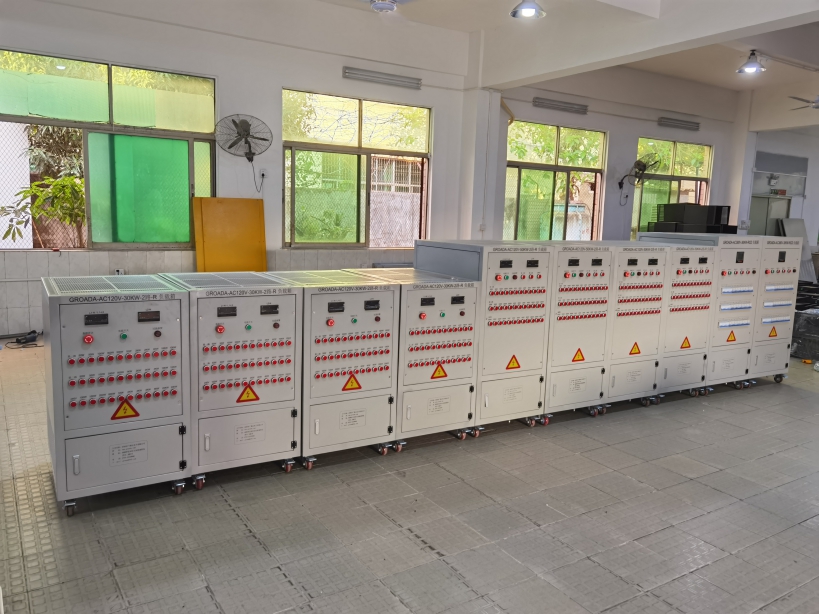
In conclusion, reactive load bank testing provides indispensable insight into generator robustness under realistic electrical conditions. It supports factory acceptance testing (FAT), commissioning, preventive maintenance, and integration with microgrids or hybrid systems. Engineers and operators should include it as part of routine validation protocols—not just for compliance, but for long-term operational reliability.