
Selecting the appropriate load bank is essential for reliable generator testing, power system validation, and ensuring operational readiness in industrial, commercial, and critical infrastructure applications. Whether you're conducting factory acceptance tests (FAT), commissioning new installations, or performing routine maintenance, a properly sized and configured load bank—whether resistive, reactive, or combination RLC type—enables accurate assessment of engine performance, voltage regulation, frequency stability, and cooling system efficiency.
Resistive load banks are ideal for simulating real-world electrical loads by converting electrical energy into heat, commonly used for diesel generator set testing. Reactive load banks introduce inductive or capacitive reactance to evaluate alternator excitation systems and power factor correction capabilities. For comprehensive testing, especially in renewable energy integration or microgrid scenarios, three-phase RLC load banks offer dynamic control over active and reactive power, enabling full-load conditions that mirror actual grid behavior.
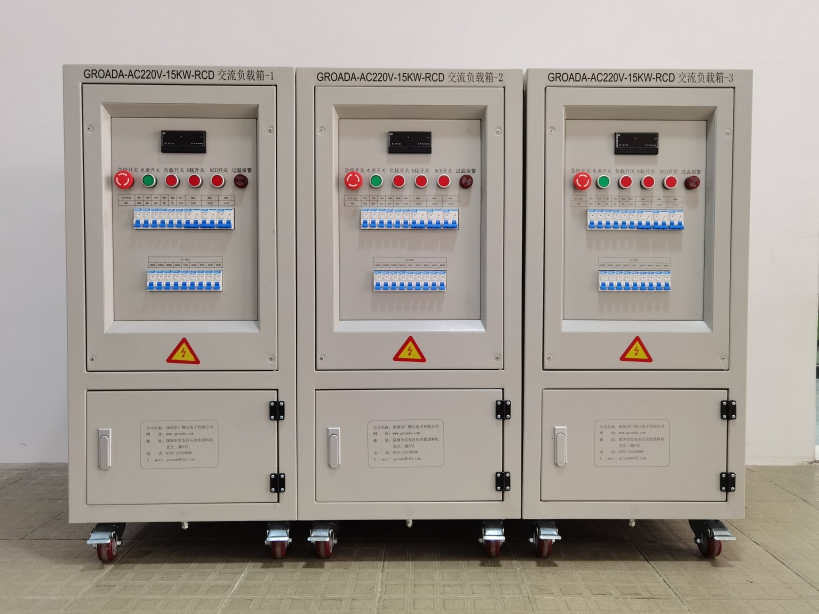
Modern load banks feature advanced controls such as Modbus RTU/TCP, Ethernet connectivity, and remote monitoring via SCADA systems, which enhance test accuracy and reduce manual intervention. Safety is paramount—look for units with CE/UL/CCC certification, thermal protection, E-STOP functionality, and robust IP ratings (e.g., IP54) for indoor/outdoor use. Mechanical design matters too: portable models with lifting eyes and fork-lift pockets simplify transport, while water-cooled systems handle higher continuous power levels than air-cooled alternatives.
Based on industry standards like IEC 60034-1 (for motor and generator testing) and IEEE 1159 (power quality), load banks must meet precise tolerances in voltage, current, and power factor measurement—typically within ±1% accuracy. Calibration should be performed annually using traceable equipment, and spare parts like resistor blocks and fans should be stocked for minimal downtime. A simulated case study from a wind farm project showed that using a programmable resistive-reactive load bank reduced turbine startup failures by 37% after identifying poor AVR response under variable load profiles.
In summary, matching your load bank’s kW/kVA rating, phase configuration, and control features to your specific application ensures both safety and compliance. Always consult engineering specs, verify certifications, and prioritize ease of operation and remote diagnostics for long-term reliability.









