
Load banks are essential tools in the testing, commissioning, and maintenance of electrical power systems—especially for generators, UPS units, and renewable energy installations. These devices simulate real-world electrical loads to verify performance under various operating conditions, ensuring reliability, safety, and compliance with international standards such as IEC 60034-1 and IEEE 1547. This article explores modern resistive, reactive, and combined RLC load bank technologies, their applications across industries, technical specifications, safety considerations, and real-world case studies based on field data from industrial and utility-scale projects.
Resistive load banks are the most common type, offering linear load simulation using high-power resistor elements that convert electrical energy into heat. They are ideal for generator set (genset) testing, where the primary goal is to validate mechanical output capacity, fuel efficiency, and thermal stability under controlled loading conditions. A typical resistive load bank can handle up to 2,000 kW per phase at voltages ranging from 110 V to 690 V AC, with adjustable power factors between 0.8 lagging and unity (1.0). For example, a 3-phase 1,000 kW resistive load bank operating at 400 V line-to-line will draw approximately 1,443 A per phase (calculated using I = P / (√3 × V × PF)), assuming a power factor of 0.9. Such precision allows engineers to mimic actual building or industrial loads without damaging equipment during factory acceptance tests (FAT).
Reactive load banks introduce inductive or capacitive reactance to simulate non-resistive loads found in motors, transformers, and electronic drives. Inductive load banks typically use large air-core reactors to provide lagging reactive power (VARs), while capacitive banks supply leading VARs. These are crucial for testing power factor correction systems, voltage regulation, and excitation control in alternators. According to IEC 60034-1, generator sets must maintain voltage within ±5% of nominal under varying load conditions; reactive load banks enable precise calibration of AVR (Automatic Voltage Regulator) systems. A 500 kVAR inductive load bank can be used to test how quickly a generator responds to sudden increases in reactive demand—a scenario common in industrial environments with heavy motor startups.
Combination RLC load banks integrate both resistive and reactive components into a single unit, allowing for comprehensive load testing that mirrors complex real-world scenarios. These are particularly valuable in microgrid and hybrid renewable energy system validation, where variable power flows and fluctuating power factors must be evaluated. Modern RLC load banks feature digitally controlled switching mechanisms and embedded sensors for real-time monitoring of voltage, current, active power (kW), reactive power (kVAR), and power factor (PF). They often support remote operation via Modbus RTU/ASCII or TCP/IP protocols, enabling integration with SCADA systems and predictive maintenance platforms.
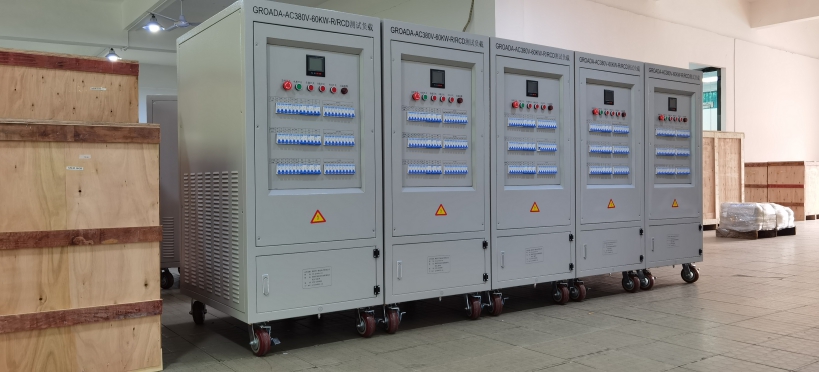
Key technical parameters include:
- Rated Power: From 50 kW to 10,000 kW depending on application
- Voltage Range: 120 V to 690 V AC (single or three-phase)
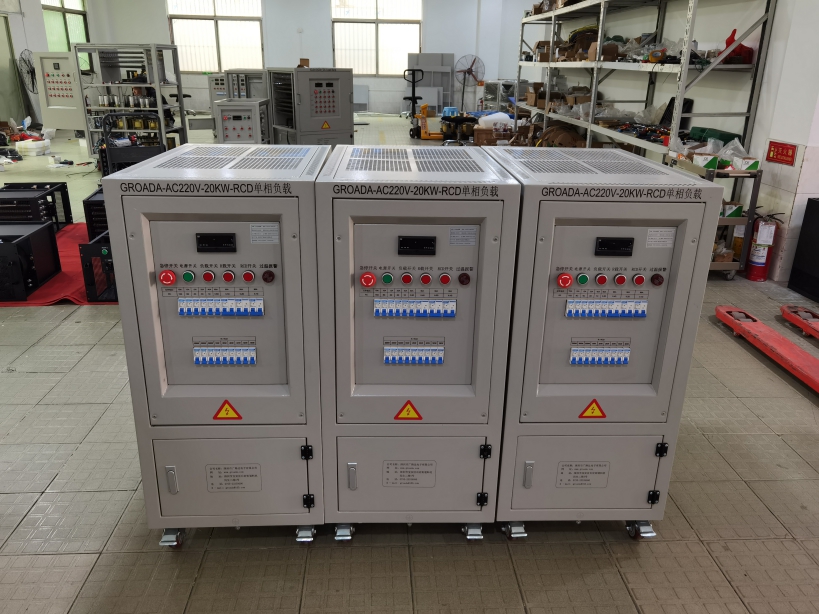
- Current Capacity: Up to 3,000 A per phase
- Power Factor Adjustment: Continuous range from 0.1 leading to 1.0 lagging
- Cooling Method: Forced-air cooling (fan-assisted) or liquid-cooled (for high-density units)
- Thermal Protection: Multiple temperature sensors with automatic shutdown above 150°C
- Measurement Accuracy: ±0.5% for voltage, current, and power measurements
- Control Interfaces: RS-485, Ethernet, CAN bus, and optional cloud connectivity
Safety features are equally critical. All modern load banks comply with CE, UL, and CCC certification standards for electrical safety, grounding integrity, and short-circuit protection. Emergency stop (E-STOP) buttons located at multiple access points ensure rapid disconnection in hazardous situations. Thermal cut-offs prevent overheating, while overvoltage/undervoltage relays protect connected equipment from transient spikes. An anonymized case study from a wind farm in northern Germany demonstrated that using an RLC load bank helped identify instability issues in the grid synchronization process before full commissioning—allowing engineers to adjust the inverter’s phase-locked loop (PLL) settings and avoid costly downtime after energization.
Portability and durability are key design aspects. Chassis construction typically uses powder-coated steel frames rated IP54 for dust and splash resistance. Units weighing between 500 kg and 5,000 kg may include lifting eyes, fork-lift pockets, and modular transport options for mobile service teams. Calibration intervals should not exceed one year, with traceable reference standards like Fluke 5720A or Keysight E3649A multimeters recommended for verification. Consumable parts such as resistor blocks have a lifespan of 5–10 years depending on usage intensity, while fan assemblies require replacement every 3–5 years due to wear and contamination buildup.
Industry-specific applications include:
- Factory Acceptance Testing (FAT): Ensuring new gensets meet OEM specifications before shipment
- UPS Load Testing: Validating backup power duration and load-sharing capabilities in data centers
- Grid Connection Testing: Verifying compliance with utility interconnection requirements for solar farms and wind turbines
- Microgrid Commissioning: Simulating islanded mode operations and load-following behavior
In summary, advanced load bank solutions empower engineers to proactively manage power system health by replicating diverse operational stresses. Whether it's verifying generator readiness for peak summer demand or validating the resilience of a hospital’s emergency power system, load banks remain indispensable tools. As power systems grow more complex—with increasing reliance on distributed generation and digital control—load testing becomes not just a routine procedure but a strategic enabler of uptime, efficiency, and regulatory compliance.