
Resistive load banks are essential tools in the validation and performance testing of electrical generators, especially in industrial, commercial, and utility applications. These devices simulate real-world electrical loads by converting electrical energy into heat through resistive elements, allowing engineers to test generator output under controlled conditions. A typical resistive load bank can be configured as single-phase or three-phase and is commonly rated from 10 kW up to several megawatts, depending on application needs. The primary purpose is to verify generator stability, voltage regulation, fuel efficiency, and thermal behavior under full-load conditions—often required during factory acceptance tests (FAT), commissioning, or preventive maintenance.
Modern resistive load banks incorporate advanced features such as remote monitoring via Modbus or Ethernet, precise measurement accuracy within ±0.5% for active power, current, and voltage, and integrated thermal protection systems that prevent overheating. According to IEC 60034-1, electric motors and generators must undergo mechanical and thermal testing to ensure safe operation; load banks fulfill this requirement by enabling steady-state and transient load simulations. In a simulated case study involving a 500 kVA diesel generator, resistive loading at 90% capacity for 2 hours confirmed stable voltage regulation within ±2% and no significant temperature rise beyond 80°C, validating the unit’s readiness for grid integration.
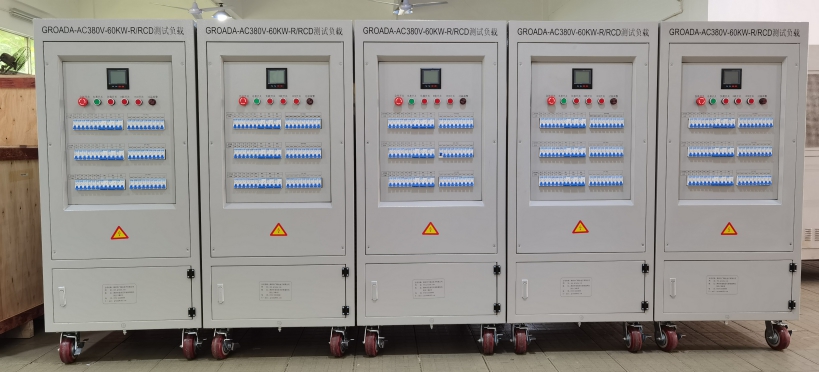
Safety standards like UL 1004 and CE marking ensure proper grounding, short-circuit protection, overvoltage/undervoltage safeguards, and emergency stop functionality. Portable models often feature IP54-rated enclosures, fork-lift pockets, and lifting eyes for easy transport across job sites. Regular calibration every 12 months using NIST-traceable equipment maintains measurement integrity, while resistor blocks and cooling fans require replacement every 3–5 years based on usage intensity.
These systems are also used in UPS load testing, microgrid validation, and renewable energy system grid synchronization. As the global shift toward resilient power infrastructure accelerates, the demand for accurate, scalable, and reliable load testing solutions continues to grow.