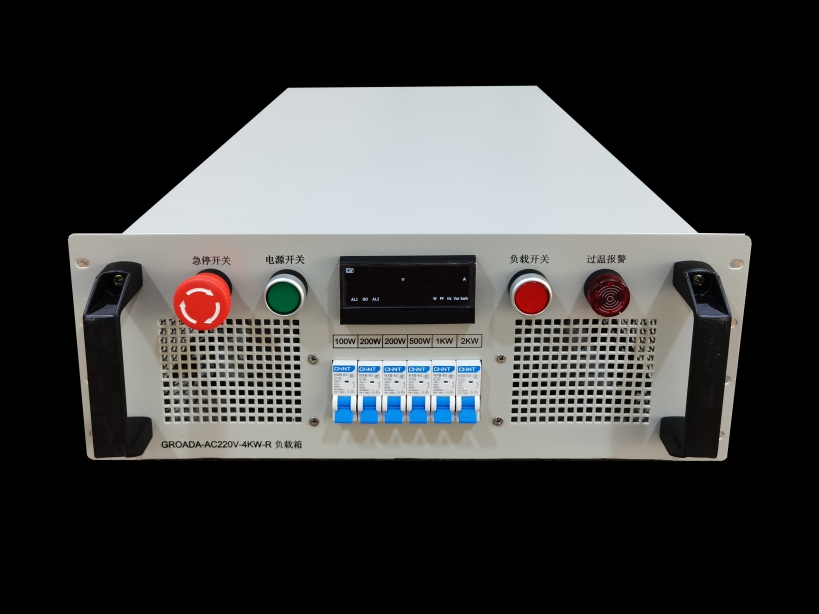
Portable resistive load banks are essential tools for validating generator performance, ensuring reliability under real-world operating conditions. These devices simulate electrical loads by converting power into heat through high-precision resistor elements, allowing engineers to test generators at various power levels—typically from 10 kW up to 2,000 kW—without requiring an actual connected load. In applications such as construction site power systems, data center UPS validation, or renewable energy integration (e.g., solar farms or wind turbines), portable load banks enable thorough commissioning tests before grid connection. According to IEC 60034-1, motor and generator testing must include load variation to verify insulation integrity and thermal stability; portable resistive load banks meet this requirement effectively. They also support factory acceptance testing (FAT) of diesel generators, where manufacturers verify output capacity and efficiency across full-load cycles. Modern units feature active cooling via forced air or water circulation, with temperature monitoring systems that prevent overheating and trigger automatic shutdown if necessary. Key parameters include voltage range (120–600 V AC), three-phase capability, adjustable power factor (from 0.8 lagging to unity), and measurement accuracy within ±1% for voltage, current, and active power. Communication interfaces like Modbus RTU/TCP or RS-485 allow remote control and data logging for automated test procedures. Safety features such as E-stop buttons, overcurrent protection, grounding compliance, and CE/UL certification ensure safe operation in industrial environments. Designed with robust chassis and IP54 rating, these units are suitable for outdoor use and can be easily transported using lifting eyes or forklift pockets. Regular calibration every 12 months using traceable standards is recommended to maintain accuracy, while fan assemblies and resistor blocks typically require replacement after 5–7 years depending on usage intensity. An anonymized case study from a mining operation in Australia showed that using a portable resistive load bank during generator installation reduced downtime by 40% compared to traditional load-testing methods.