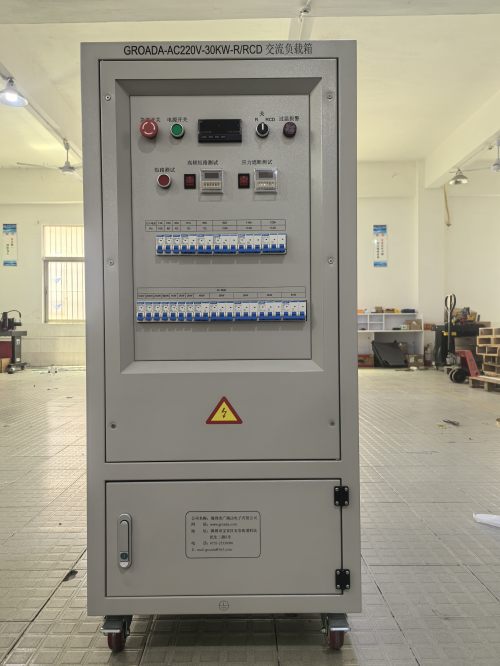
A DC electronic load bank factory is a specialized manufacturing facility that designs, builds, and tests high-precision resistive and dynamic load systems for evaluating the performance of direct current (DC) power sources—such as battery banks, solar inverters, fuel cells, and electric vehicle (EV) charging stations. These load banks simulate real-world electrical loads to verify system stability, efficiency, and safety under various operating conditions.
Modern DC electronic load banks use advanced IGBT (Insulated Gate Bipolar Transistor) or MOSFET-based switching circuits to provide precise control over load current and voltage, enabling stepless regulation from 0% to 100% capacity. Unlike mechanical or fixed resistor banks, electronic versions offer faster response times, higher accuracy, and better repeatability in test scenarios like factory acceptance testing (FAT), grid integration verification, and renewable energy system validation.
Manufacturers must adhere to international standards such as IEC 60034-1 (for motor/generator testing), IEEE 1547 (distributed energy resources), and UL 1975 (electronic load equipment). Thermal management is critical—air-cooled units often include variable-speed fans and thermal sensors to prevent overheating, while water-cooled models are used in high-power applications (e.g., >500 kW). Remote monitoring via Modbus RTU/TCP, Ethernet, or CAN bus allows automated testing sequences and data logging, essential for compliance reporting and predictive maintenance.
An anonymized case study from a leading European EV battery manufacturer showed that using a custom-designed DC electronic load bank reduced discharge cycle testing time by 40% compared to traditional methods. The system enabled rapid load ramping, accurate power factor control (±0.5%), and real-time measurement of voltage sag and ripple—all within IEC 62619 battery safety limits.
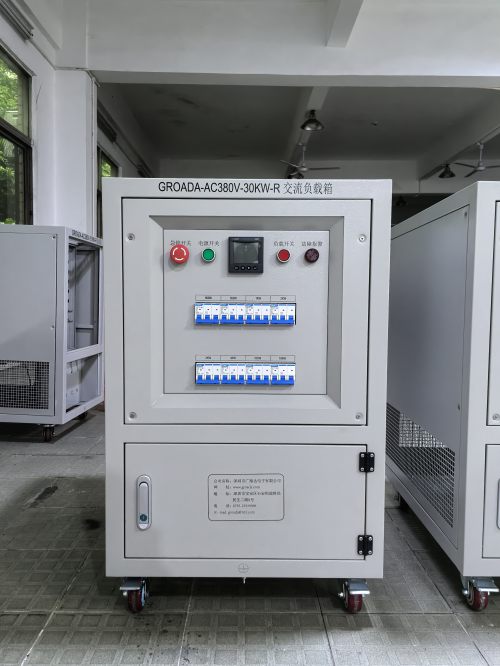
Key parameters include rated power (from 5 kW up to 5 MW), voltage range (up to 1500 V DC), phase configuration (single or multi-phase), and protection features like overcurrent, overtemperature, and E-stop functionality. Portable units often feature IP54 enclosures and forklift pockets for easy transport, making them ideal for field service or mobile labs.
To ensure long-term reliability, manufacturers recommend annual calibration using NIST-traceable standards and periodic replacement of fan assemblies and resistor blocks. With increasing demand for clean energy and electrification, DC electronic load bank factories play a vital role in validating next-generation power systems—from hydrogen fuel cells to ultra-fast EV chargers.