
Load bank testing is a critical procedure used to verify the performance, reliability, and safety of electrical power systems such as generators, UPS units, and renewable energy sources like wind or solar farms. This method simulates real-world electrical loads without requiring an actual power-consuming system, making it indispensable during factory acceptance tests (FAT), commissioning, and routine maintenance.
The main body of load bank testing involves applying controlled resistive, reactive, or combined (RLC) loads to evaluate how a power source behaves under varying conditions—from no-load to full-rated capacity. Resistive load banks convert electrical energy into heat, ideal for testing generator output capacity and cooling systems. Reactive load banks simulate inductive or capacitive loads common in industrial environments, ensuring voltage regulation and power factor stability. Combination load banks offer flexibility by adjusting both resistive and reactive components simultaneously, allowing comprehensive validation of three-phase power systems.
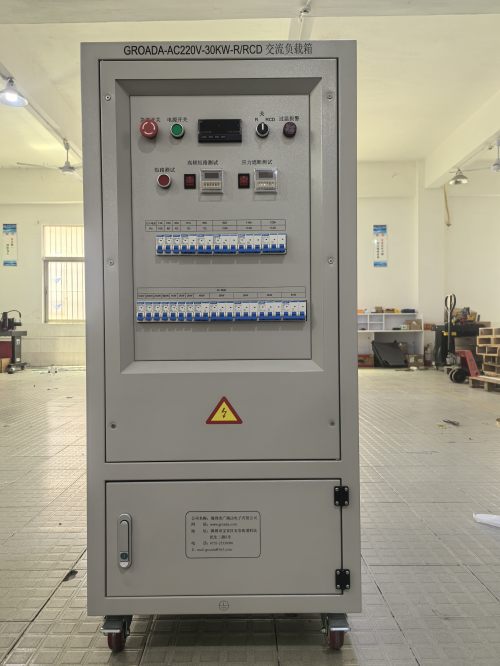
Key parameters include rated power (kW/kVA), voltage level (e.g., 230V/400V AC), number of phases (single or three-phase), current range, and power factor adjustment (typically 0.8 lagging to 1.0 leading). Modern load banks feature thermal protection, remote monitoring via Modbus or Ethernet, and accurate measurement capabilities (±0.5% accuracy for active/reactive power). Safety features such as overtemperature, short-circuit, and E-STOP functions ensure compliance with IEC 60034-1 and IEEE 1547 standards for motor and distributed generation testing.
A simulated example from a diesel generator installation at a remote mining site showed that 100% load testing for 2 hours revealed a 3% voltage drop under full load—prompting adjustments in AVR settings and improving long-term operational stability. Similarly, portable load banks are widely used in field testing of backup power systems for data centers, where precise control of load profiles ensures uninterrupted service during grid failures.
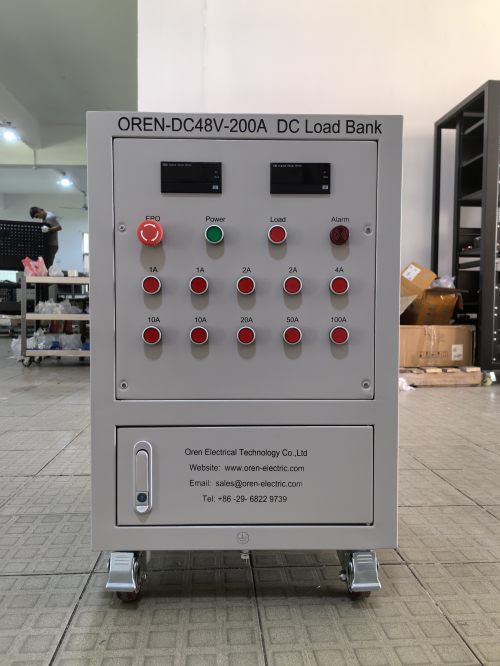
In conclusion, load bank testing provides essential verification of power system readiness and efficiency. By adhering to industry standards and leveraging advanced test equipment, engineers can detect faults early, optimize performance, and prevent costly downtime in critical infrastructure applications.









