
Resistive load banks are essential tools in the electrical testing of generators, ensuring they perform reliably under real-world conditions. These devices simulate electrical loads by converting electrical energy into heat through resistive elements, allowing engineers to verify generator output capacity, stability, and protection system responses. Common applications include factory acceptance tests (FAT), site commissioning, preventive maintenance, and performance validation for backup power systems such as diesel generators in hospitals, data centers, and industrial facilities.
A key advantage of resistive load banks is their simplicity and accuracy—offering precise control over active power (kW) without reactive components, which makes them ideal for evaluating engine response, voltage regulation, and cooling system effectiveness. Unlike reactive or capacitive load banks, resistive models do not introduce harmonic distortion or phase shifts, simplifying test interpretation. Modern portable resistive load banks often feature remote monitoring via Modbus RTU or Ethernet, enabling automated load stepping and real-time data logging for compliance with IEC 60034-1 and IEEE 1547 standards.
However, users may encounter common issues such as overheating due to inadequate airflow, especially during prolonged high-load tests. To mitigate this, many units now include automatic thermal shutdown and forced-air cooling with variable-speed fans. Another challenge is improper load distribution across phases in three-phase systems—an issue addressed by balanced load bank designs and smart controllers that monitor individual phase currents.
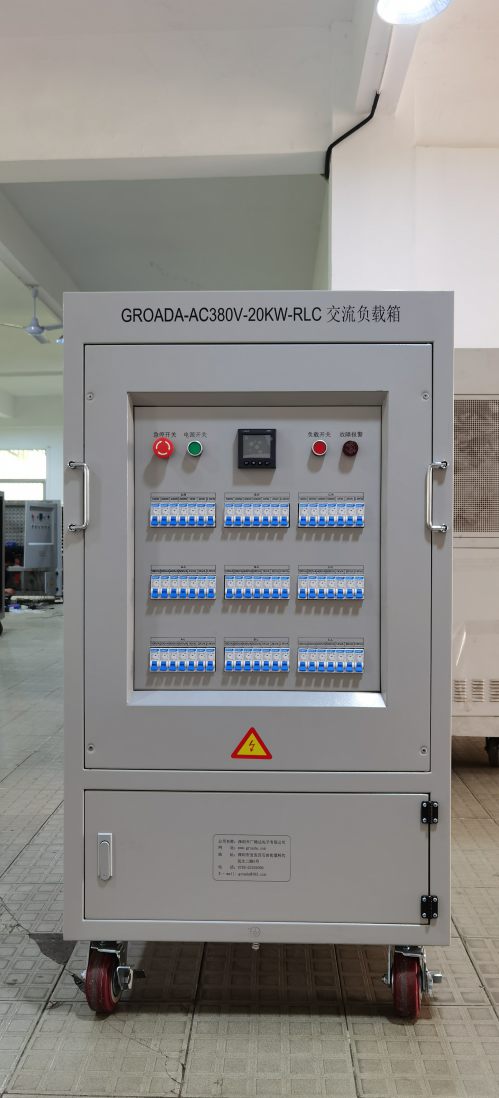
Recent trends highlight increased demand for digital twin integration and IoT-enabled load testing platforms, where live generator data from load banks is fed into predictive analytics software for condition-based maintenance. For example, an anonymized case study at a 2 MW data center generator showed that regular resistive load testing improved fault detection time by 30% and reduced unexpected downtime by 45%. These advancements support grid resilience and renewable energy integration, particularly in microgrid environments.
Maintaining accuracy requires periodic calibration (recommended annually) using certified DC current sources and precision meters per NIST traceable procedures. Key consumables like resistor blocks and fan assemblies should be inspected every 500 hours of operation. Overall, resistive load banks remain indispensable for ensuring reliable power generation, with evolving technologies enhancing both safety and operational efficiency.