
A portable load bank is a critical tool in the testing, validation, and maintenance of electrical power systems—especially generators, UPS systems, and renewable energy installations. Unlike fixed or stationary load banks, portable units offer flexibility in deployment across remote sites, construction zones, or emergency response scenarios where temporary power solutions are required. This article explores the technical design, applications, safety standards, and real-world use cases of modern portable load banks to help engineers, facility managers, and procurement teams make informed decisions when selecting or deploying these essential test instruments.
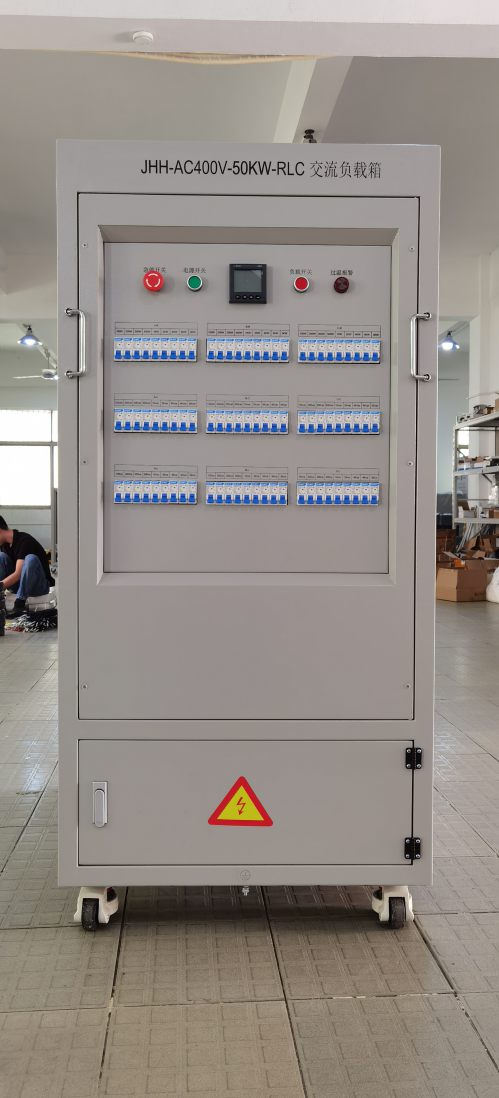
Portable load banks typically fall into three categories: resistive, reactive, and combination (RLC) types. Resistive load banks simulate real-world resistive loads such as lighting, heating, and industrial motor drives by converting electrical energy directly into heat. These are ideal for generator set (genset) factory acceptance testing (FAT), load rejection tests, and basic performance verification. Reactive load banks, on the other hand, introduce inductive or capacitive reactance to mimic the behavior of motors, transformers, and HVAC systems, enabling evaluation of voltage regulation and power factor stability under varying load conditions. A combination RLC load bank integrates both resistive and reactive components, offering comprehensive testing capability for complex systems like microgrids or hybrid wind-solar setups.
The core functionality of any load bank lies in its ability to safely draw controlled amounts of power from the source while measuring key parameters such as voltage, current, active power (kW), reactive power (kVAR), and power factor (PF). Modern portable units incorporate digital control systems that allow step-wise loading, automatic ramping, and remote monitoring via Ethernet, Modbus RTU, or CAN bus interfaces. For instance, a 500 kW resistive-only portable load bank may have a rated voltage range of 120–600 VAC, support single- or three-phase operation, and feature a power factor adjustment range from 0.8 lagging to 0.8 leading—critical for validating generator excitation systems and AVR responses during dynamic load changes.
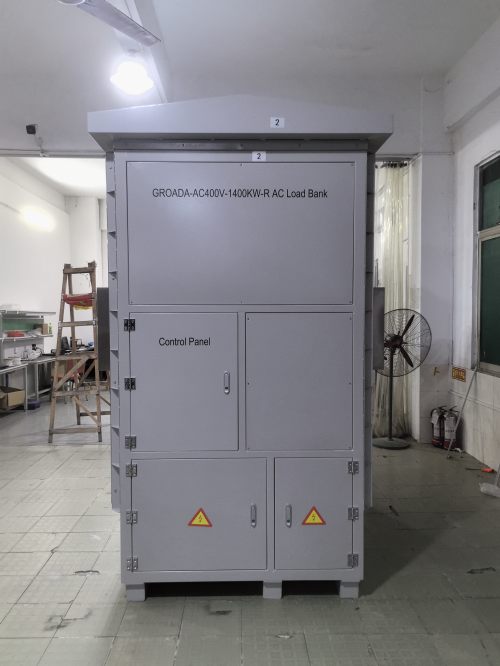
Safety and compliance are paramount. According to IEC 60034-1 (Rotating Electrical Machines – Part 1: Rating and Performance), all load banks used for generator testing must be designed with thermal protection mechanisms that prevent overheating due to prolonged full-load operation. Similarly, IEEE Standard 1159 defines acceptable voltage waveform distortion limits and emphasizes the need for precise measurement accuracy in power quality assessments. Portable load banks must also meet regional certifications such as CE (Europe), UL (North America), or CCC (China) for electrical safety and electromagnetic compatibility (EMC). Common protective features include ground fault detection, overtemperature shutdown, short-circuit protection, and emergency stop (E-STOP) buttons located at multiple access points.
Mechanical design plays a significant role in portability. Units are often built with rugged steel chassis, IP54-rated enclosures for dust and splash resistance, and lifting eyes or forklift pockets for safe transport. Cooling methods vary depending on power level: air-cooled models (fan-based) dominate up to 1 MW, while water-cooled systems are preferred for higher capacities (>1 MW) where noise and space constraints limit airflow. Heat dissipation efficiency directly impacts operational duration; a well-designed 300 kW resistive load bank can sustain continuous full-load operation for 8 hours before requiring cooldown, whereas lower-end models may require more frequent rest periods.
Calibration and maintenance are often overlooked but vital for long-term reliability. Manufacturers recommend annual calibration using traceable standards compliant with ISO/IEC 17025. Key parameters to verify include voltage and current transducers, power meter accuracy, and temperature sensors. Consumable parts such as resistor blocks, cooling fans, and contactors should be inspected every 6 months and replaced based on wear indicators or service life data (typically 5–10 years). A recommended spare parts kit might include replacement fuses, thermocouples, and fan modules—especially for field-deployed units operating in harsh environments.
Case Study 1: Anonymized Offshore Wind Farm Grid Connection Test
During commissioning of a 5 MW offshore wind turbine, the client needed to validate the grid interface controller (GIC) and ensure stable synchronization with the national grid. Using a 1 MW three-phase RLC portable load bank, engineers simulated both resistive and inductive loads ranging from 0% to 100% of rated capacity over 24 hours. The test revealed a transient voltage dip exceeding 5% during sudden load shedding—a condition not previously identified in simulations. Post-analysis led to firmware updates in the GIC’s reactive power control logic, improving grid compliance and reducing risk of disconnection events.
Case Study 2: Simulated Data Center UPS Load Testing
A large data center in Singapore deployed a 200 kVA portable resistive load bank to perform quarterly load tests on their diesel-powered UPS system. The unit was connected via remote control software over an RS-485 link, allowing unattended testing during non-peak hours. Over six months, the system recorded consistent output voltage within ±2% tolerance and maintained 98% efficiency across all load steps. No mechanical failures occurred, confirming the robustness of the UPS under realistic stress conditions.
In summary, portable load banks serve as indispensable tools in modern power infrastructure management. Whether it's ensuring generator readiness before a natural disaster, verifying battery backup performance in mission-critical facilities, or supporting grid integration of distributed energy resources (DERs), these devices provide measurable insights into system health and resilience. With proper selection, installation, and regular maintenance, they deliver reliable results that align with international standards and industry best practices.