
Connecting a load bank to a generator is a critical step in testing and validating the performance, reliability, and safety of power generation systems. Whether for factory acceptance testing (FAT), preventive maintenance, or commissioning a new installation, proper connection ensures accurate load simulation and prevents damage to both the generator and the load bank.
First, ensure that the generator is turned off and isolated from any grid or load source. Verify that the generator’s output voltage and frequency match the load bank’s rated specifications—typically 230/400 V AC for three-phase systems in Europe, or 120/240 V for single-phase in North America. Use appropriate personal protective equipment (PPE) such as insulated gloves and safety glasses before proceeding.
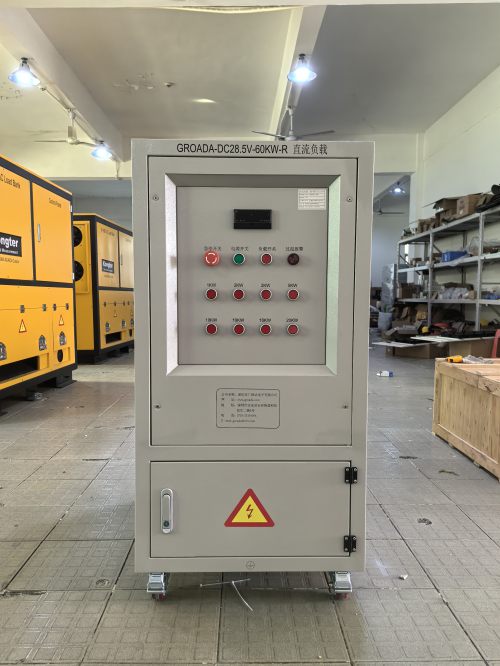
Next, connect the load bank using heavy-duty cables with adequate current-carrying capacity (e.g., 500 A minimum for a 100 kW resistive load bank). Match phase-to-phase connections: L1–L1, L2–L2, L3–L3, and neutral to neutral if required. For three-phase systems, use a balanced configuration to avoid unbalanced loading, which can cause overheating or reduced efficiency. Always check the grounding system—both generator and load bank must be grounded to the same point to prevent potential differences and electrical hazards.
Before energizing, verify all control settings on the load bank are properly configured: power factor adjustment range (for reactive load banks), ramp rates, and remote monitoring parameters if applicable. If using an automated system (e.g., Modbus or Ethernet communication), confirm connectivity and correct IP addresses. Then, start the generator and gradually increase the load in steps (e.g., 25%, 50%, 75%, 100%) over several minutes to allow thermal stabilization. Monitor key metrics like voltage regulation, frequency stability, fuel consumption, and exhaust temperature.
For portable load banks used in field testing, ensure the chassis is secured and wheels locked during operation. In cold environments, pre-warm the load bank to avoid condensation-induced faults. After testing, reduce load slowly and shut down the generator following manufacturer procedures.
This process aligns with IEC 60034-1 standards for motor/generator testing and IEEE 1159 for power quality assessment. Properly executed, it validates generator performance under real-world conditions and ensures compliance with international safety norms.