
Load banks are essential tools in the testing, commissioning, and maintenance of power generation systems—including diesel generators, gas turbines, and renewable energy inverters. Among the various types of load banks available—resistive, reactive, capacitive, and combination (RLC)—the resistive load bank is one of the most widely used due to its simplicity, reliability, and ability to simulate real-world electrical loads such as lighting, heating, and motor-driven equipment. This article provides a comprehensive overview of resistive load bank technology, including design principles, application scenarios, technical specifications, safety standards, and real-world use cases.
A resistive load bank functions by converting electrical energy into heat through high-power resistors. These devices are typically constructed from wire-wound or ceramic-based resistor blocks that can withstand sustained high temperatures while maintaining stable resistance values. The core principle relies on Ohm’s Law (V = IR), where voltage (V) applied across the load bank causes current (I) to flow, generating power (P = VI) in the form of thermal energy. Unlike reactive or capacitive loads, which store and release energy cyclically, resistive loads dissipate energy continuously, making them ideal for simulating constant-load conditions like those found in commercial buildings, hospitals, or data centers.
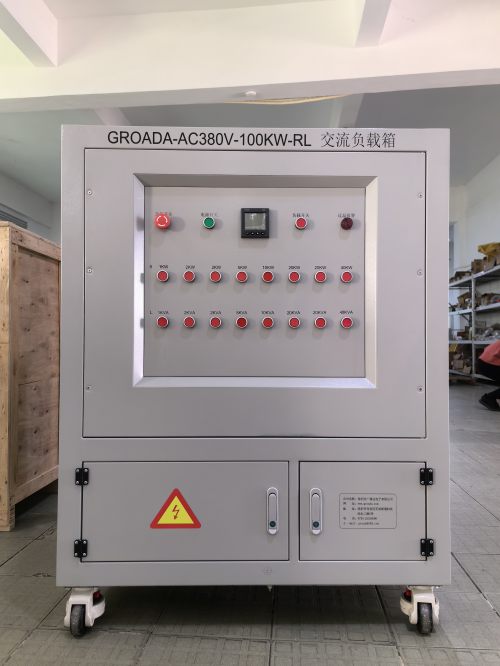
In generator testing applications, resistive load banks play a critical role in verifying system performance under full-load conditions. For example, during factory acceptance testing (FAT), a generator must demonstrate it can supply rated power at specified voltage and frequency without overheating or experiencing mechanical stress. A resistive load bank allows engineers to apply up to 100% of the generator's rated load over extended periods—typically 2–4 hours—to validate output stability, fuel efficiency, cooling system effectiveness, and governor response time. According to IEC 60034-1 (2018), electric motors and generators must undergo full-load performance tests to ensure compliance with torque-speed characteristics; similar validation protocols apply to generator sets using resistive loading.
The typical operating parameters for a three-phase resistive load bank include:
- Power rating: 50 kW to 5000 kW (with custom options beyond this range)
- Voltage levels: 120/208 VAC to 600 VAC (single or three-phase configurations)
- Current range per phase: 100 A to 2000 A
- Power factor: Unity (PF = 1.0), fixed for resistive loads
- Cooling method: Forced air cooling (fan-assisted), sometimes water-cooled for larger units
- Temperature rise: ≤ 65°C above ambient (per IEEE 1459-2018)
- Thermal protection: Automatic shutdown at preset temperature thresholds
Modern resistive load banks often feature advanced control systems that allow remote monitoring via Modbus RTU, Ethernet TCP/IP, or CAN bus interfaces. These capabilities enable automated load cycling, ramp-up/down sequences, and integration with SCADA or building management systems (BMS). Some models also offer digital displays for real-time measurement of voltage, current, active power (kW), reactive power (kVAR), and power factor—all crucial for validating generator performance against utility grid requirements.
Safety is paramount when operating heavy-duty load banks. Key protections include:
- Grounding terminals compliant with UL 1507 and CE EN 61010
- Short-circuit protection with fast-acting fuses or circuit breakers
- Overtemperature sensors triggering automatic disengagement
- Emergency stop buttons located both on the unit and remotely
- IP54-rated enclosures for dust and splash protection
Mechanical considerations include robust steel chassis construction, lifting eyes for crane handling, and fork-lift pockets for transport. Portable units typically weigh between 500 kg and 5000 kg depending on capacity, with dimensions ranging from 1.5 m x 1 m x 1.2 m to 3 m x 2 m x 2 m. These designs ensure safe deployment in field environments such as construction sites, military bases, or off-grid installations.
Maintenance intervals for resistive load banks vary based on usage intensity but generally follow these guidelines:
- Calibration every 12 months (using certified multimeters and calibrators per NIST traceability)
- Inspection of resistor blocks for signs of warping or oxidation
- Cleaning of fan blades and heatsinks at least quarterly
- Replacement of airflow fans every 3–5 years or after 10,000 operating hours
One anonymized case study from a mid-sized hospital illustrates the importance of resistive load testing. Prior to installing a new 1 MW diesel generator, the facility performed a four-hour resistive load test at 90% load. Measurements showed a steady voltage drop of only 2.5% under full load, confirming the generator’s ability to maintain stable output. Additionally, the cooling system operated within acceptable limits (maximum temperature rise: 58°C), allowing the hospital to proceed confidently with the project. Without prior load testing, potential issues like inadequate cooling or poor governor response might have led to unexpected outages during emergencies.
Another simulated example involves a microgrid installation integrating solar PV and battery storage. To ensure the backup generator could seamlessly take over during grid failure, a 3-phase resistive load bank was used to simulate a 200 kW load for 3 hours. Data collected included transient response times, synchronization accuracy, and emissions levels. Results indicated the generator met all performance criteria set by the local utility, enabling successful commissioning.
Industry standards such as IEC 60034-1, IEEE 1459-2018, and ANSI C50.13 provide clear guidance on load bank testing procedures, particularly regarding thermal behavior, electrical safety, and measurement accuracy. Compliance with these standards ensures not only regulatory approval but also long-term operational reliability. In fact, many utilities require proof of load testing before accepting any new generator into their interconnection agreement—a process known as “grid code compliance.”
For procurement managers, choosing the right resistive load bank involves evaluating several factors: required load capacity, portability needs, environmental conditions (indoor/outdoor), and budget constraints. Custom solutions may be necessary for unique applications such as offshore platforms or Arctic environments where extreme cold affects component performance.
In conclusion, resistive load banks remain indispensable for validating the performance and reliability of electrical power systems. Their straightforward yet powerful functionality makes them suitable for everything from routine generator checks to complex integration projects involving hybrid power sources. As energy systems grow more sophisticated, so too must the tools used to test them—ensuring resilience, safety, and continuous operation in both normal and emergency conditions.