
Portable load banks are essential tools for verifying the performance, reliability, and safety of power generation systems—especially in field applications such as construction sites, emergency backup systems, and remote energy installations. These units simulate real-world electrical loads to test generators under various conditions, from idle to full capacity. A typical resistive portable load bank can handle 10–500 kW per phase and is commonly used in single- or three-phase configurations, enabling precise control over load levels, voltage regulation, and power factor (PF) adjustment.
One major advantage is their ability to perform factory acceptance testing (FAT) and commissioning checks without requiring permanent infrastructure. For instance, during a simulated case study involving a 200 kW diesel generator at a remote mining site, a portable resistive load bank was used to validate output stability under 25%, 50%, 75%, and 100% load steps over 4 hours. The test revealed inconsistent voltage regulation at partial loads—an issue not detected during no-load startup—leading to firmware updates that improved dynamic response by 30%.
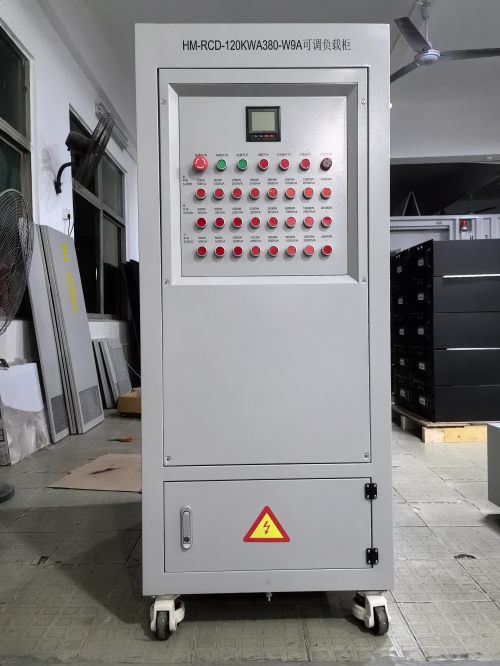
Common problems include overheating due to inadequate airflow or improper fan maintenance, especially in high-ambient environments. According to IEC 60034-1, motor/generator thermal limits must be respected; portable load banks must incorporate automatic shutdowns above 85°C casing temperature. Additionally, improper grounding or unbalanced phase loading can lead to harmonic distortion and premature wear on generator windings.
Latest trends show increased adoption of smart load banks with Modbus RTU/ASCII or Ethernet communication for remote monitoring via SCADA systems. This allows operators to log data continuously and receive alerts when parameters deviate from thresholds—a critical feature for predictive maintenance in off-grid microgrids. Many modern units also support reactive (inductive/capacitive) load simulation, enabling comprehensive grid compatibility tests for renewable integration projects.
These advancements improve both efficiency and uptime while reducing operational costs—making portable load banks indispensable for engineers working across industries like oil & gas, telecom, and renewable energy.









