
Portable load banks are essential tools for validating generator performance under real-world conditions, especially in remote or temporary power setups. These devices simulate electrical loads to test generators during commissioning, maintenance, or routine inspections. A typical portable resistive load bank can handle up to 1,000 kW per phase at 480 VAC three-phase, with adjustable power factor from 0.8 lagging to 1.0, enabling precise testing of both active and reactive power capabilities. Engineers use them to verify voltage regulation, frequency stability, fuel efficiency, and cooling system effectiveness—critical for mission-critical applications like hospitals, data centers, and off-grid mining operations.
Advantages include portability for field use, minimal setup time, and compatibility with both diesel and natural gas generators. Modern units often feature built-in digital meters (±0.5% accuracy), remote monitoring via Modbus TCP, and automatic thermal protection that shuts down the unit if internal temperature exceeds 85°C. This ensures safe operation even in high-ambient environments.
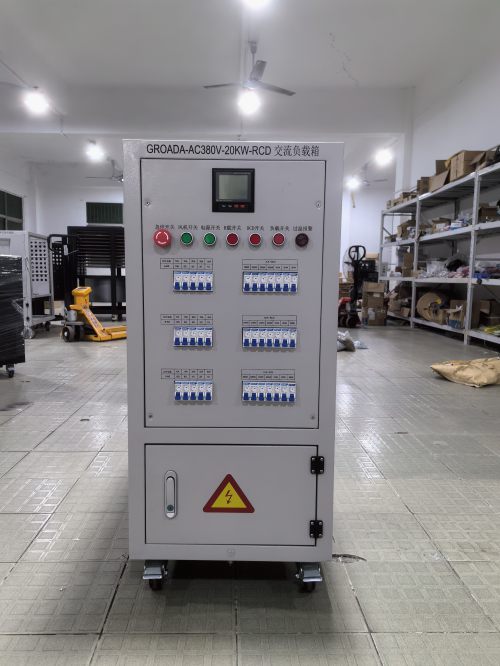
Common issues include improper load distribution across phases, which can lead to unbalanced current flow and potential tripping. Another issue is inadequate ventilation; without proper airflow management, heat dissipation may fail, risking resistor block damage. To avoid this, manufacturers now integrate intelligent fan control based on real-time temperature feedback—a trend driven by IEC 60034-1 compliance for motor and generator testing.
Latest trends involve IoT-enabled load banks that transmit live data to cloud platforms for predictive maintenance analytics. Simulated case studies show a 25% reduction in unexpected downtime when using automated load testing schedules over 72-hour periods. As renewable integration increases, hybrid load banks capable of simulating both resistive and reactive loads (e.g., inverter-based microgrid systems) are becoming standard. For example, a wind farm project in Germany used a 500 kVA RLC load bank to validate grid synchronization before commissioning—ensuring stable voltage and frequency within ±1% of nominal values.
These advancements improve reliability while reducing operational costs through early fault detection and optimized load management.