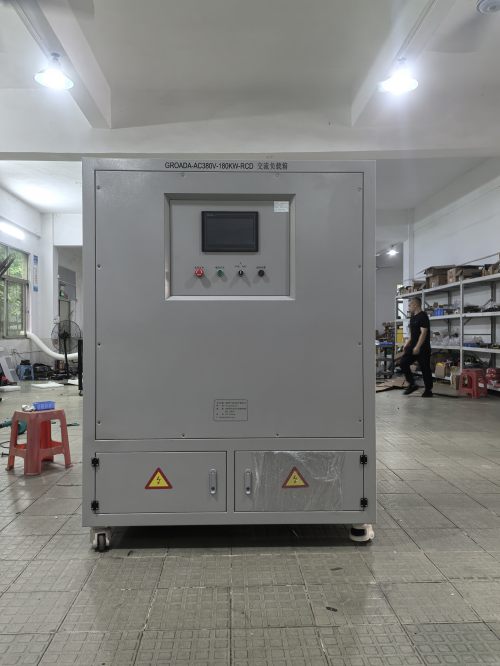
Resistive load banks are essential tools for validating generator performance under real-world operating conditions. Unlike reactive or capacitive loads, resistive load banks simulate pure electrical resistance, allowing engineers to test a generator's ability to deliver stable power output at various load levels. This type of testing is critical during factory acceptance tests (FAT), commissioning, and routine maintenance of diesel or natural gas generators used in data centers, hospitals, and industrial facilities. A typical resistive load bank operates by converting electrical energy into heat through high-power resistor elements—this heat must be efficiently dissipated using forced-air cooling systems or water-cooled configurations depending on the load capacity. Standards such as IEC 60034-1 and IEEE 1547 guide the design and testing procedures, ensuring that voltage regulation, frequency stability, and thermal management meet international safety and performance criteria. Modern resistive load banks often include digital control interfaces like Modbus RTU or Ethernet, enabling remote monitoring and automated load cycling. For example, a 500 kW three-phase resistive load bank can simulate up to 100% load in steps of 10%, with precision measurement accuracy within ±1% for active power and power factor. In an anonymized case study from a hospital backup system, a 300 kW load bank was used to verify generator response over 2 hours at 80% load, revealing a 3% voltage drop that prompted adjustments to the AVR settings. Proper calibration every 12 months and inspection of fan assemblies and resistor blocks ensure long-term reliability. These systems are typically certified to CE, UL, and CCC standards, making them suitable for global deployment across different regulatory environments.