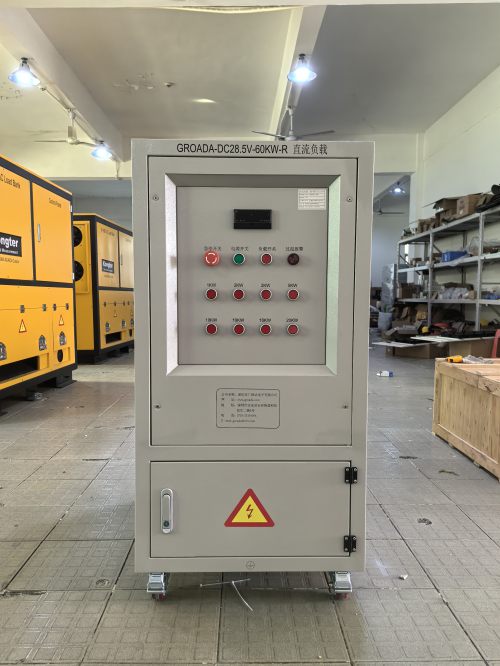
Resistive load banks are essential tools in the electrical testing and validation of power generation systems, particularly for generators used in critical infrastructure, industrial facilities, and emergency backup applications. These devices simulate real-world electrical loads by converting electrical energy into heat through resistive elements, allowing engineers to test generator performance under controlled conditions. A properly designed resistive load bank can replicate full-load scenarios from 10% to 100% of rated capacity, enabling accurate assessment of voltage regulation, frequency stability, fuel efficiency, and thermal behavior. For example, during factory acceptance testing (FAT), a three-phase resistive load bank with a 500 kW rating at 480 VAC can be used to verify that a diesel generator maintains output voltage within ±2% tolerance while operating continuously for 4 hours. This aligns with IEC 60034-1 standards for motor and generator testing, which specify acceptable deviations in voltage and current under load. Modern resistive load banks often include remote monitoring via Modbus or Ethernet interfaces, allowing real-time data logging of active power, reactive power, power factor, and temperature rise—key metrics for predictive maintenance and system optimization. Safety features such as overtemperature protection, ground fault detection, and emergency stop functionality ensure safe operation in high-power environments. The cooling method—typically forced air or liquid-cooled—determines portability and application range; water-cooled units are ideal for continuous heavy-duty use, while air-cooled models offer mobility for field testing. Maintenance includes periodic calibration (every 12 months), fan replacement every 2–3 years, and inspection of resistor blocks for oxidation or wear. In an anonymized case study from a hospital backup power system, a 300 kW resistive load bank was used to validate generator response after a major overhaul. Testing revealed a 5% improvement in fuel consumption when the generator was operated at 75% load versus 100%, supporting operational cost savings. This type of load bank is indispensable for ensuring reliability, safety, and compliance in both new installations and routine maintenance programs across diverse industries.