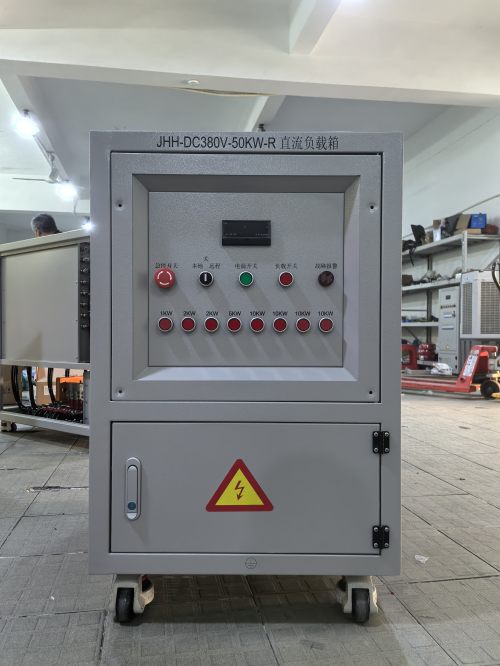
Portable load banks are essential tools for testing the performance, reliability, and safety of generators across industrial, commercial, and emergency power systems. Unlike fixed load bank installations, portable units offer flexibility in deployment—ideal for field testing during commissioning, maintenance, or after repairs. The introduction of modern resistive, reactive, and combination (RLC) load banks enables precise simulation of real-world electrical loads, ensuring that generators deliver stable voltage, frequency, and power output under various conditions.
The main body explains how these load banks function using active and passive circuits to mimic actual consumer loads—resistive banks convert electrical energy into heat, reactive banks simulate inductive or capacitive loads (such as motors or transformers), and RLC banks combine both to test full-load behavior. Key parameters such as rated power (from 5 kW up to 1000 kVA), three-phase compatibility, power factor adjustment (0.1–1.0), and thermal protection ensure comprehensive generator validation. Modern designs incorporate remote monitoring via Modbus, Ethernet, and RS-485 interfaces, allowing operators to log data, detect anomalies, and automate tests without physical proximity.
Safety is paramount—portable load banks comply with IEC 60034-1 for motor/generator testing standards, feature overtemperature and short-circuit protection, and include E-STOP mechanisms. Units are built with IP54-rated enclosures for dust and water resistance, and many include fork-lift pockets for easy transport. Calibration every 12 months ensures measurement accuracy within ±0.5% for voltage, current, and power. A simulated case study from a hospital backup system shows that 72-hour continuous load testing at 80% capacity revealed intermittent voltage dips caused by aging battery inverters—prompting early intervention before failure.
In conclusion, portable load banks provide critical assurance that generators will perform reliably when needed most—whether during peak demand or emergency outages. With robust design, smart controls, and adherence to international standards, they remain indispensable in preventive maintenance strategies worldwide.