
Resistive load banks are essential tools for validating the performance and reliability of electrical power systems, including generators, uninterruptible power supplies (UPS), and renewable energy inverters. These devices simulate real-world electrical loads by converting electrical energy into heat through precision resistor networks. Unlike reactive or capacitive load banks, resistive models provide a stable, linear load that is ideal for testing active power output, engine cooling, and thermal stability under full-load conditions.
According to IEC 60034-1, which governs rotating electrical machines, proper load testing ensures motor efficiency, temperature rise limits, and mechanical integrity—principles directly applicable to generator set validation. A typical resistive load bank may be rated from 50 kW to 5 MW, with voltage levels ranging from 230 VAC single-phase to 480 VAC three-phase, allowing flexible deployment in industrial, commercial, and utility-scale applications.
Modern resistive load banks often include features such as remote monitoring via Modbus RTU or Ethernet, automatic ramping capabilities, and integrated power factor correction circuits. Safety mechanisms like overtemperature protection, short-circuit detection, and emergency stop functions meet CE/UL/CCC certification standards for global use. Thermal management is critical—air-cooled units typically operate within 60°C ambient temperatures, while water-cooled variants allow higher continuous power densities.
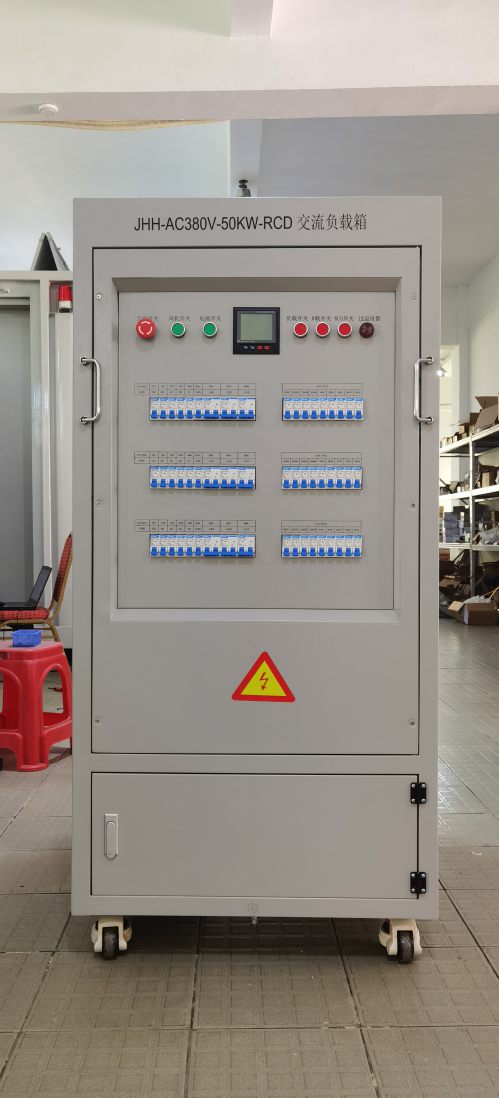
For example, during a factory acceptance test (FAT) of a 1,000 kVA diesel generator, an engineer used a 900 kW resistive load bank at 480 VAC three-phase to verify steady-state operation over 8 hours. Measured parameters included voltage regulation (< ±2%), frequency stability (< ±0.5 Hz), and coolant temperature rise (< 15°C). This process ensured the generator could reliably support critical infrastructure without overheating or voltage sag.
In another simulated case study involving a data center’s UPS system, a 300 kW resistive load bank validated backup runtime and battery discharge characteristics under full load. The test revealed a 7% discrepancy in reported runtime versus actual measured values—an issue later corrected through firmware updates and improved battery calibration procedures.
Such tests not only comply with IEEE 1159 standards on power quality but also enhance system uptime and reduce unexpected failures in mission-critical environments. With accurate measurement accuracy (±0.5% for voltage, current, and power), modern resistive load banks serve as indispensable assets in commissioning, maintenance, and predictive diagnostics across diverse sectors—from oil & gas to healthcare and telecom.









