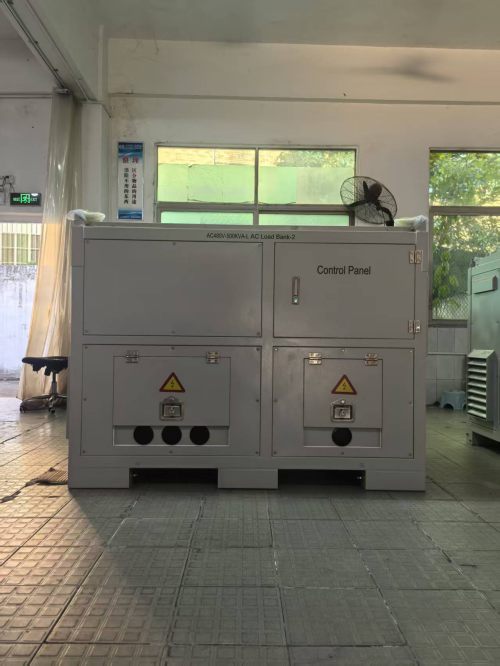
Battery load bank testing is a critical procedure used to evaluate the performance, capacity, and safety of battery systems under real-world electrical loads. This method simulates actual usage conditions—such as discharge during power outages or peak demand—allowing engineers and facility managers to validate battery health before deployment or during routine maintenance. Unlike simple voltage checks, load bank testing applies controlled resistance (or reactive load) to draw current from the battery, measuring parameters like voltage stability, temperature rise, internal resistance, and discharge time under defined load profiles.
This process is essential for applications ranging from backup power systems in data centers to electric vehicle (EV) battery packs and renewable energy storage (e.g., solar farms with battery banks). For example, in a 48V DC UPS system, a resistive load bank can simulate a 10kW load over 30 minutes to verify that the battery maintains output within ±5% of nominal voltage while staying below 60°C. Standards such as IEC 62619 and IEEE 1188 guide test procedures, ensuring compliance with safety and performance benchmarks.
Modern load banks offer adjustable power factors (from 0.1 to 1.0), remote monitoring via Modbus or Ethernet, and thermal protection to prevent overheating. They support single-phase or three-phase configurations and are often portable for field use. A typical test cycle includes pre-test inspection, application of stepwise load (e.g., 25%, 50%, 75%, 100%), recording of voltage, current, and temperature at each stage, followed by post-test analysis. In one anonymized case study, a telecom tower operator reduced unplanned downtime by 40% after implementing monthly load bank tests on their 24V lead-acid battery banks.
Battery load bank testing not only ensures regulatory compliance but also extends battery lifespan through early detection of degradation. It is an indispensable tool for asset integrity management across industries.