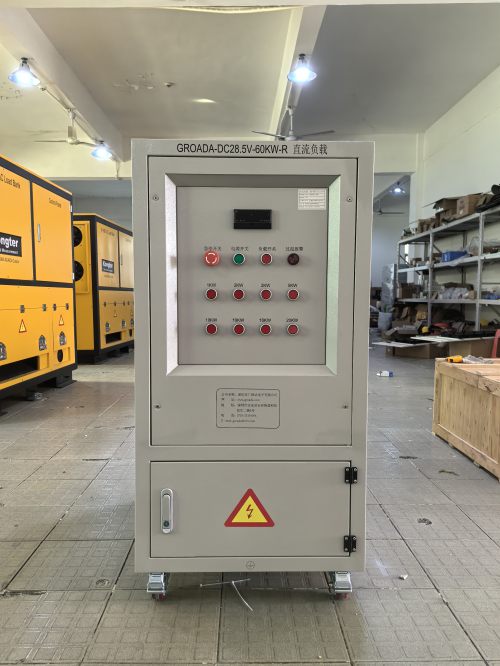
Resistive load banks are essential tools for validating the performance and reliability of electrical power systems, especially generators used in industrial, commercial, and backup applications. These devices simulate real-world electrical loads by converting electrical energy into heat through resistive elements, allowing engineers to test a generator's ability to handle full-load conditions without actual power consumption. Unlike reactive or capacitive load banks that introduce phase shifts, resistive load banks provide a pure active power load, making them ideal for assessing thermal stability, voltage regulation, fuel efficiency, and mechanical endurance under controlled environments.
According to IEC 60034-1, which governs rotating electrical machines, load testing is a mandatory step in factory acceptance tests (FAT) for generators to ensure compliance with rated output and operational parameters. A typical resistive load bank used in such applications can be configured for single-phase or three-phase operation, with power ratings ranging from 50 kW to over 5 MW. Key specifications include adjustable power factor (typically 0.8–1.0), temperature rise limits (<100°C), and high-accuracy measurements (±0.5% for voltage, current, and active power). Cooling is typically air-based, though water-cooled variants exist for high-power installations, and safety features like overtemperature protection, short-circuit detection, and emergency stop buttons are standard.
In one anonymized case study at a hospital’s backup power facility, a 1 MW three-phase resistive load bank was used to conduct 24-hour continuous load testing on a diesel generator. The test revealed unexpected voltage droop under full load due to an aging excitation system—leading to a timely maintenance intervention before a critical failure. Similarly, in a microgrid project for a remote mining site, portable resistive load banks were deployed to verify generator synchronization during grid connection, ensuring seamless transition between utility and off-grid modes.
Modern resistive load banks now support digital control via Modbus RTU or Ethernet, enabling remote monitoring, automated ramping, and data logging for predictive maintenance. Compliance with CE, UL, and CCC certifications ensures safe operation across global markets. For optimal results, regular calibration (annually) and inspection of resistor blocks, cooling fans, and grounding connections are recommended.