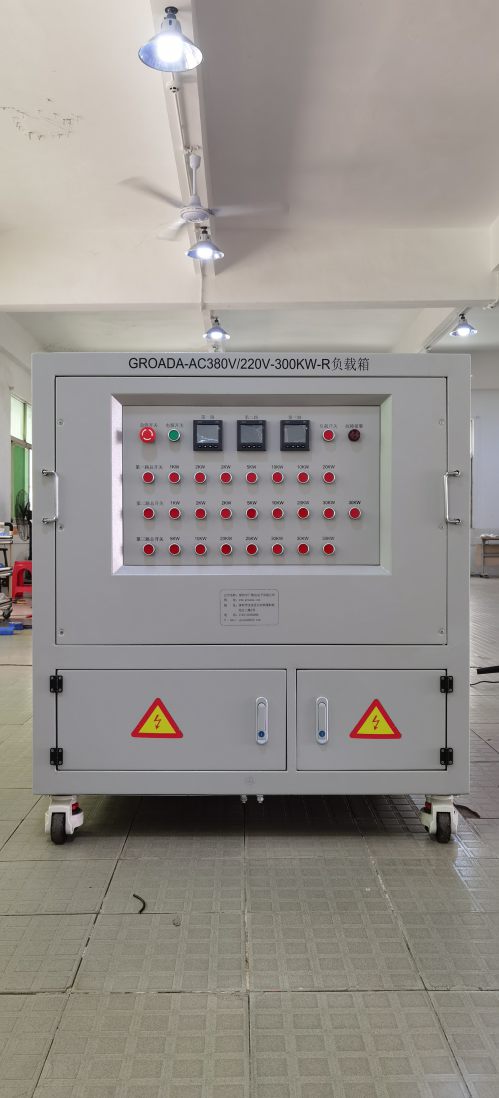
Load bank testing is a critical procedure used to validate the performance, reliability, and safety of generators, uninterruptible power supplies (UPS), and renewable energy systems such as wind farms or microgrids. Unlike real-world load conditions, which can be unpredictable, a load bank provides controlled, repeatable electrical loads that simulate actual operating conditions—ensuring equipment operates efficiently under full capacity without risk.
There are three main types: resistive, reactive, and combination (RLC) load banks. Resistive load banks convert electrical energy into heat using high-power resistor elements and are ideal for testing generator engines, cooling systems, and voltage regulation. Reactive load banks, often inductive or capacitive, simulate lagging or leading power factors typical of motors or transformers—essential for verifying excitation system stability. RLC load banks offer both resistive and reactive components, making them suitable for comprehensive load testing in industrial or utility applications.
For example, during factory acceptance testing (FAT), a 1000 kW three-phase resistive load bank may be used to verify that a diesel generator maintains voltage within ±2% of nominal over 8 hours at 100% load. In another case, an anonymized microgrid integration project required a 500 kVA reactive load bank to test how a solar inverter responded to sudden changes in reactive power demand—a scenario critical for grid compliance under IEEE 1547 standards.
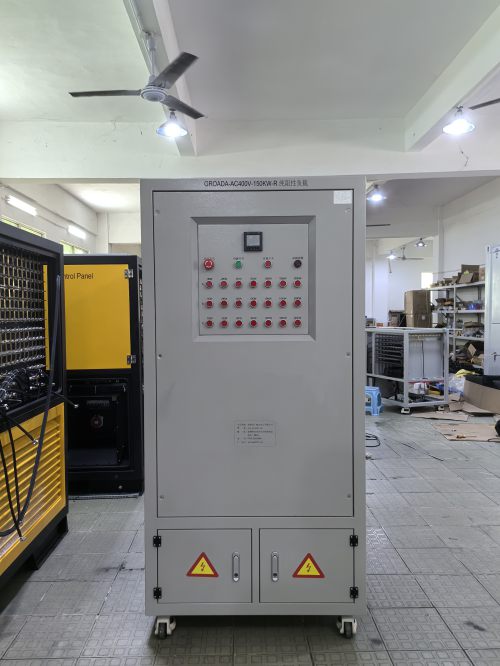
Modern load banks incorporate advanced features like remote monitoring via Modbus RTU or Ethernet, automatic thermal protection, and precise measurement accuracy (±0.5% for active power). They comply with IEC 60034-1 for motor performance and UL/cUL/CE certifications for safety. Mechanical design includes IP54-rated enclosures, lifting eyes for transport, and air or water cooling options depending on power density.
Regular calibration every 12 months ensures measurement integrity, while fan replacement and resistor block inspections are recommended annually. These practices help prevent false readings, improve longevity, and reduce downtime—especially crucial in mission-critical environments like hospitals or data centers.
In summary, load bank testing is not optional—it’s foundational to safe and efficient power system operation. Whether you’re commissioning a new generator, validating a UPS, or integrating renewables, proper load testing ensures uptime, compliance, and confidence.