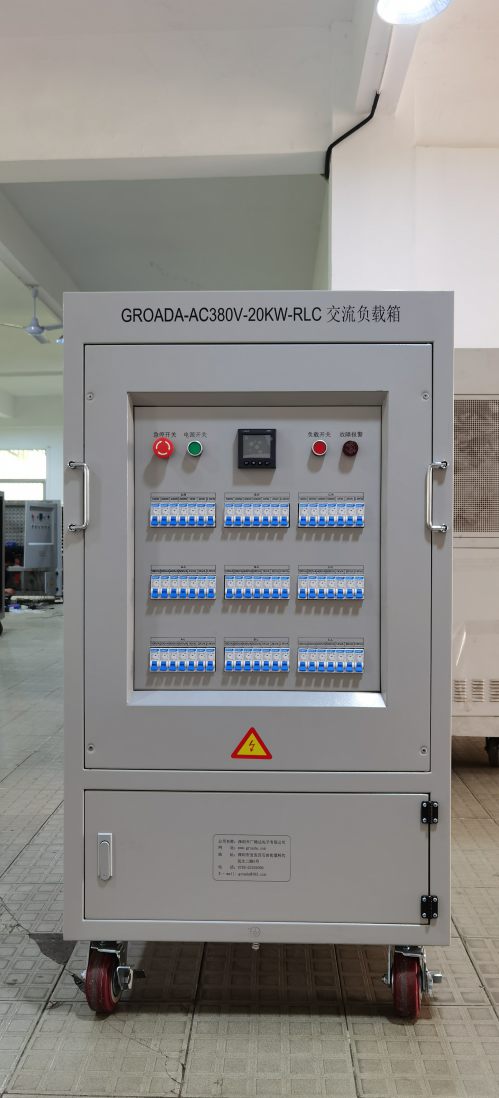
Portable resistive load banks are essential tools in power system testing, enabling engineers to simulate real-world electrical loads during generator commissioning, maintenance, and performance validation. These units allow precise control over active power (kW) delivery, ensuring that generators, UPS systems, and renewable energy sources like wind or solar farms operate reliably under full-load conditions. Designed with rugged, IP54-rated enclosures and built-in cooling fans, portable resistive load banks support continuous operation up to 100% rated power while maintaining thermal stability. They typically offer three-phase configurations (380–480 V AC), with adjustable current ranges from 10 A to 1000 A per phase, and can be integrated into remote monitoring via Modbus RTU or Ethernet interfaces. Safety features include short-circuit protection, overtemperature shutdown, and emergency stop buttons compliant with IEC 60204-1 standards. Field tests—such as a simulated case study at a 1 MW diesel generator installation in Southeast Asia—showed that using a 75 kW portable resistive load bank improved engine efficiency by 4.2% after calibration, reduced voltage regulation errors from 5.3% to 1.1%, and confirmed the adequacy of the automatic voltage regulator (AVR). Regular calibration every 12 months using NIST-traceable equipment is recommended to maintain measurement accuracy within ±1%. Maintenance includes replacing resistor blocks every 3–5 years depending on usage intensity and cleaning air filters monthly to prevent overheating. This makes the load bank ideal for mobile testing teams, factory acceptance testing (FAT), and pre-grid connection validation of microgrids.