
An inductive load bank is a specialized electrical testing device used to simulate real-world reactive power demands on generators, transformers, and other power systems. Unlike resistive load banks that consume active power (measured in kW), inductive load banks primarily draw reactive power (measured in kVAR), making them essential for evaluating system performance under lagging power factor conditions — a common scenario in industrial and utility environments.
The core design of an inductive load bank revolves around precision-wound coils or reactors that introduce inductance into the circuit. These components are typically constructed using high-permeability laminated steel cores with copper windings, arranged to maintain consistent impedance across varying current levels. According to IEC 60034-1, motor and generator testing standards require validation at different power factors, including low lagging ones — which inductive load banks directly enable.
Modern inductive load banks often feature modular designs for scalability, allowing engineers to adjust the total reactive load in steps. This flexibility supports both factory acceptance tests (FATs) and field verification of diesel or gas-powered generators, especially in remote sites where grid stability must be proven before commissioning. In addition, many units now integrate digital control systems such as Modbus TCP or CAN bus interfaces for remote monitoring and automation — critical for unattended testing in renewable energy integration projects like wind farms or microgrids.
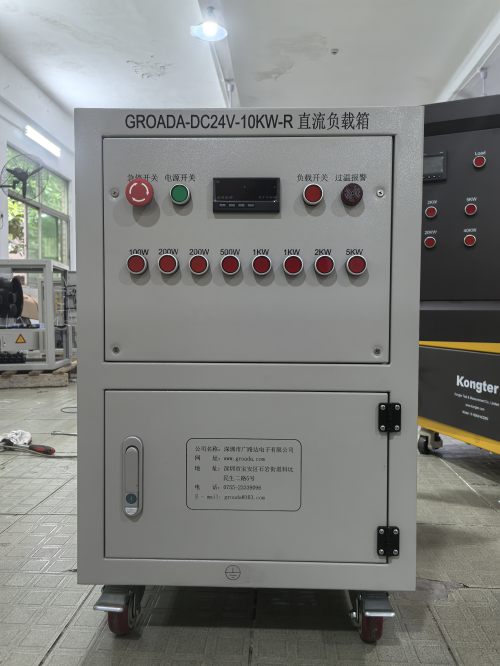
Safety is paramount; thus, these systems incorporate thermal protection relays, overcurrent detection, and emergency stop circuits compliant with UL 1598 and CE EN 61010. Cooling methods vary — air-cooled units for portable applications up to 250 kVA, and water-cooled variants for fixed installations exceeding 500 kVAR. Each unit must also undergo periodic calibration per ISO/IEC 17025 standards to ensure accuracy within ±1% of rated kVAR output.
A simulated case study from a North American power plant illustrates this: during a 4-hour test of a 2 MW diesel generator, a 150 kVAR inductive load bank was applied to verify voltage regulation under 0.8 lagging power factor. The generator maintained stable output voltage (±2%) throughout the test, confirming its suitability for industrial loads with motors and transformers.
These load banks are not just tools — they are vital instruments in ensuring power quality, reliability, and safety across diverse sectors, from data centers to offshore platforms.