
Load bank testing is a critical procedure used to verify the performance, reliability, and safety of power generation systems such as diesel generators, gas turbines, and renewable energy inverters. It simulates real-world electrical loads in a controlled environment to ensure that equipment operates efficiently under full or partial load conditions before deployment or during routine maintenance. This method is widely applied in industries including construction, manufacturing, data centers, and utilities where uninterrupted power supply is essential.
The main body of load bank testing involves three primary types: resistive, reactive, and combination (RLC) load banks. Resistive load banks absorb active power by converting it into heat through precision resistor elements—ideal for testing engine mechanical output and cooling system efficiency. Reactive load banks, on the other hand, simulate inductive or capacitive loads using coils or capacitors, enabling tests on power factor correction systems and generator voltage regulation. Combination load banks offer both functions, allowing comprehensive evaluation of generators across multiple parameters like power factor, harmonic distortion, and thermal stability.
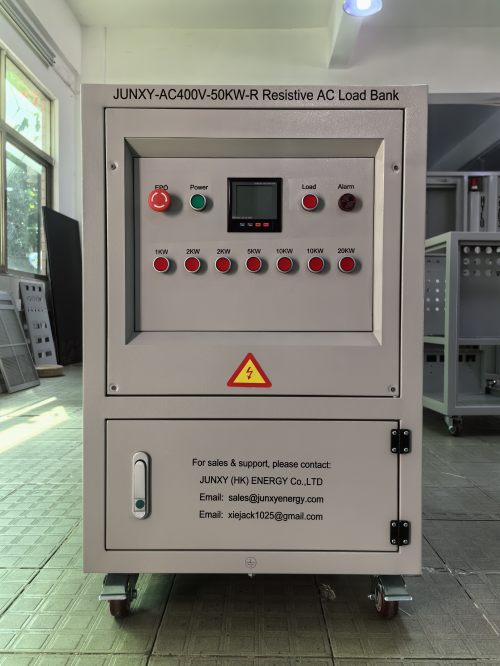
Modern load banks are often portable and equipped with advanced control interfaces such as Modbus, Ethernet, and CAN bus communication protocols. They feature built-in digital meters for accurate measurement of voltage, current, active power (kW), reactive power (kVAR), and power factor (PF). Safety features like overtemperature protection, emergency stop buttons, and grounding compliance with IEC 60364 standards ensure safe operation in field environments. Cooling methods vary from air-cooled to water-cooled systems, depending on the rated power (typically ranging from 5 kW to 10 MW) and application context.
Case studies demonstrate their value: an anonymized case study from a hospital backup generator installation revealed that without pre-deployment load testing, the unit failed to maintain stable voltage during peak demand due to inadequate fuel-air mixture calibration—a flaw identified only after load bank simulation. Similarly, in a simulated example involving a wind farm grid connection test, reactive load bank testing confirmed that the inverter could maintain a power factor within ±0.05 of unity under varying grid conditions, ensuring compliance with IEEE 1547 standards.
In conclusion, load bank testing provides engineers and facility managers with reliable validation tools for generator performance, safety compliance, and long-term operational confidence. Whether used for factory acceptance testing, commissioning, or periodic maintenance, these systems enhance asset life and reduce unexpected downtime—making them indispensable in modern power infrastructure planning and management.









