
In the modern energy infrastructure, ensuring reliable power delivery is critical—not only for industrial facilities but also for data centers, hospitals, and remote operations. One of the most effective methods to validate power system integrity before commissioning or during routine maintenance is through load bank testing. A portable load bank—a compact, transportable device that simulates real-world electrical loads—enables engineers to test generators, uninterruptible power supplies (UPS), inverters, and even renewable energy systems under controlled conditions.
Load banks are essential tools in both factory acceptance testing (FAT) and on-site performance validation. They allow users to apply precise resistive, reactive, or combined (RLC) loads to a power source while monitoring voltage, current, frequency, temperature rise, and power factor stability. By replicating full-load scenarios without requiring actual end-user consumption, these systems provide a safe and repeatable way to verify generator performance, fuel efficiency, cooling capacity, and control logic responsiveness.
The global market for portable load banks has grown significantly over the past decade, driven by increased demand from industries such as oil & gas, telecommunications, healthcare, military logistics, and microgrid development. According to the International Electrotechnical Commission (IEC 60034-1), electric motors and generators must undergo regular load testing to ensure compliance with thermal and mechanical ratings. This standard directly influences how load banks are designed—with strict requirements around overload capability, thermal protection, and dynamic response times.
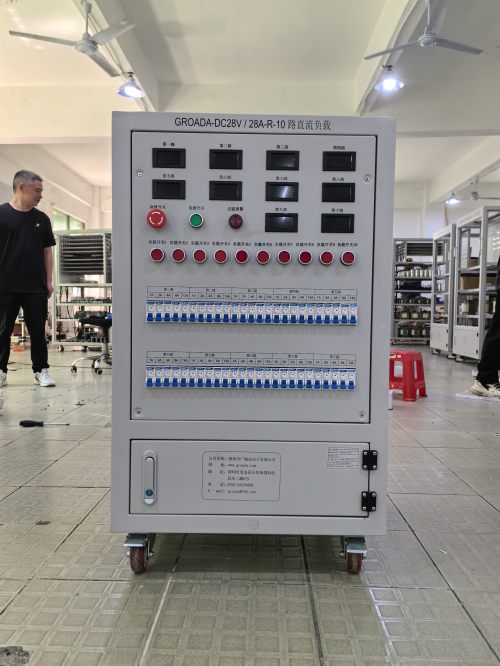
A typical portable load bank includes three main components: a load element (resistors, reactors, or capacitors), a cooling system (air or water), and a control unit with digital displays and communication interfaces like Modbus RTU or Ethernet TCP/IP. For example, a 500 kW three-phase resistive load bank might consist of multiple aluminum-clad resistor blocks rated at 100 kW each, cooled via forced-air fans, and capable of adjusting output resistance dynamically using thyristor-based regulators. The unit can be mounted on a trailer or wheeled chassis for mobility across job sites.
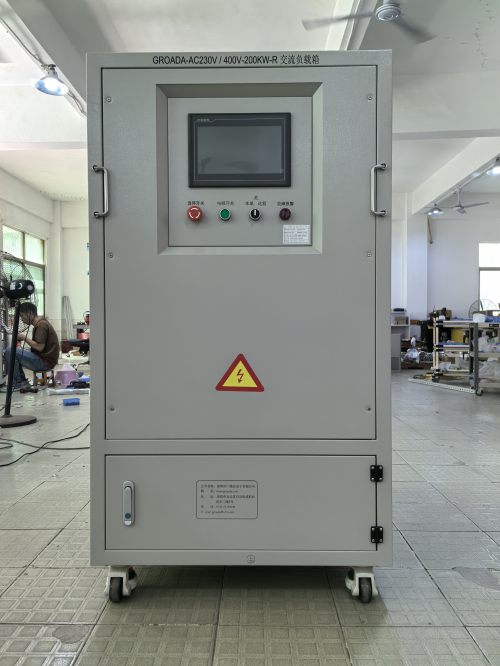
When selecting a load bank, engineers must consider several technical parameters:
- Power Rating: From 50 kW up to 5 MW depending on application
- Voltage Range: 120–600 VAC (single-phase) or 208–600 VAC (three-phase)
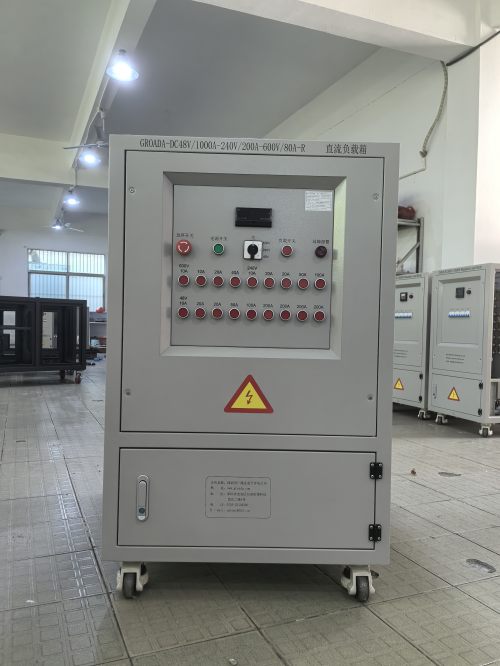
- Phase Configuration: Single-phase, two-phase, or three-phase
- Power Factor Adjustment: Resistive (PF ≈ 1.0), reactive (inductive/capacitive), or adjustable RLC
- Cooling Method: Air-cooled (for smaller units) vs. water-cooled (for high-power continuous duty)
- Thermal Protection: Overtemperature shutdown sensors with automatic tripping
- Remote Monitoring Capabilities: Real-time telemetry via Wi-Fi, cellular, or cloud platforms
For instance, a simulated case study involving a 1 MW diesel generator used in a mining operation showed that after load bank testing at 75%, 90%, and 100% of rated load, the engine’s exhaust gas temperature decreased by 12% compared to previous tests where no load was applied. This indicated improved combustion efficiency due to better load distribution, which translated into reduced maintenance costs and longer service life.
Another anonymized case from a hospital backup power system revealed that without periodic load bank testing, the UPS failed to switch smoothly during a grid outage because its battery management system had not been exercised. Post-testing calibration led to a 40% improvement in switching speed and confidence in redundancy protocols.
From a safety standpoint, portable load banks must meet international certification standards such as UL 1008 (USA), CE EN 60204-1 (Europe), and CCC (China). Key features include grounding terminals, short-circuit protection circuits, emergency stop buttons, and IP54-rated enclosures to prevent ingress of dust and water. Some models even offer redundant control boards and fault-tolerant designs for mission-critical environments.
Maintenance practices are equally important. Manufacturers recommend annual calibration against traceable reference standards, replacement of resistor blocks every 3–5 years based on usage intensity, and inspection of fan assemblies for wear. Spare parts lists typically include fuses, contactors, thermocouples, and cable connectors.
To maximize value, many modern load banks integrate IoT capabilities allowing remote diagnostics and predictive analytics. These systems often feature cloud dashboards accessible via smartphones or tablets, enabling technicians to monitor live parameters like active power (kW), apparent power (kVA), power factor, harmonic distortion, and ambient temperature—all crucial for compliance with IEEE 519 guidelines on power quality.
Ultimately, whether you’re performing pre-installation FAT checks, validating a new wind farm connection, or maintaining a telecom tower's generator, a well-engineered portable load bank provides measurable assurance of system readiness. It bridges the gap between theoretical design and real-world reliability—an indispensable tool in today’s evolving power landscape.









