
Portable load banks are essential tools for testing the performance, reliability, and safety of generators, UPS systems, and renewable energy sources like wind turbines or solar farms. These units simulate real-world electrical loads, allowing engineers to verify that power systems operate correctly under full load conditions—without requiring actual connected equipment. A well-designed portable load bank can be used in factory acceptance tests (FAT), site commissioning, preventive maintenance, or emergency readiness checks.
The most common types include resistive, reactive, and combination (RLC) load banks. Resistive load banks convert electrical energy into heat using high-power resistor blocks and are ideal for testing generator output capacity and engine cooling systems. Reactive load banks introduce inductive or capacitive reactance, simulating real-world motor and transformer loads, which is crucial for assessing voltage regulation and excitation system response. RLC load banks combine both functions, enabling comprehensive testing of three-phase systems across various power factors.
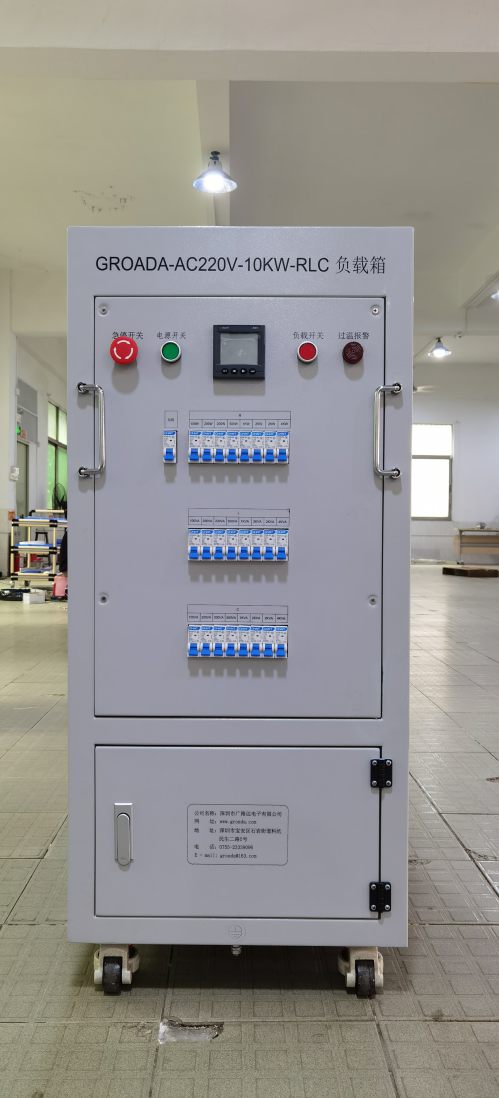
Modern portable units often feature remote control via Modbus, Ethernet, or CAN bus interfaces, with built-in digital meters for precise monitoring of voltage, current, active and reactive power, and power factor. They also include critical safety features such as overtemperature protection, short-circuit detection, emergency stop buttons, and grounding compliance to meet IEC 60034-1 and IEEE 1547 standards for generator and grid-connected systems.
For example, during a simulated case study involving a 500 kVA diesel generator at a hospital backup system, a 400 kW resistive load bank was applied for 4 hours at 100% load. The test confirmed stable frequency and voltage regulation, with no overheating or fuel inefficiency—a result that validated the generator’s readiness for emergency use.
These load banks typically range from 20 kW to 500 kW, with single or three-phase configurations, IP54-rated enclosures for dust and splash resistance, and air-cooled designs suitable for field operations. Mechanical durability includes forklift pockets, lifting eyes, and corrosion-resistant chassis for transport across sites. Regular calibration every 12 months ensures measurement accuracy within ±1%, while fan replacement cycles and resistor block inspections support long-term reliability.
Engineers, facility managers, and project teams rely on portable load banks not only to comply with industry standards but also to prevent unexpected failures—especially in mission-critical applications where downtime means serious operational and financial consequences.