
Portable load banks are essential tools for validating the performance of generators, uninterruptible power supplies (UPS), and other electrical systems under real-world operating conditions. Unlike static or fixed installations, portable load banks offer flexibility in testing locations—from factory floors to remote construction sites—ensuring that equipment meets required standards before commissioning.
The main body of this article explores how resistive, reactive, and combination (RLC) load banks function in both single-phase and three-phase configurations. Resistive load banks simulate pure resistive loads like lighting or heating systems, while reactive load banks mimic inductive or capacitive loads such as motors or capacitor banks. A combination load bank provides comprehensive testing by allowing adjustable power factor control from 0.1 lagging to 1.0 leading, which is critical for verifying generator excitation systems and voltage regulation.
Modern portable units incorporate advanced features including digital monitoring, remote control via Modbus or Ethernet, and thermal protection with automatic shutdown at high temperatures. These capabilities ensure safe operation and accurate data logging during extended tests—often lasting several hours—to evaluate fuel consumption, cooling efficiency, and emissions compliance. For example, a 500 kW three-phase resistive load bank can be used for factory acceptance testing (FAT) of a diesel generator, where it simulates 100% load for up to 8 hours to confirm stable output voltage and frequency within IEC 60349-1 tolerances.
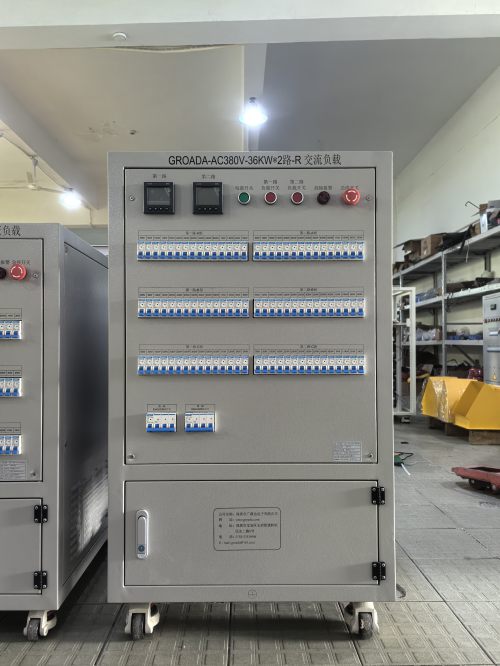
In conclusion, portable load banks are indispensable for ensuring reliability across energy infrastructure. Whether used in industrial maintenance, renewable energy integration, or emergency backup system validation, they provide objective test results that help prevent unexpected failures and reduce downtime. Their modular design, portability, and adaptability make them ideal for engineers, facility managers, and utility operators seeking precision and safety in electrical load testing.