
Resistive load banks are essential tools for testing the performance, reliability, and safety of generators, UPS systems, and other power sources under real-world conditions. Unlike reactive or capacitive loads, resistive load banks simulate purely real power consumption—typically modeled as a pure resistance in electrical circuits—which makes them ideal for evaluating thermal capacity, engine cooling, fuel consumption, and overall system stability.
These devices are commonly used in factory acceptance tests (FAT), commissioning, preventive maintenance, and emergency preparedness programs. For example, during generator testing, a resistive load bank applies a controlled electrical load to the generator output, allowing engineers to verify that it can deliver rated power at specified voltage and frequency without overheating or failing. IEC 60034-1 and IEEE 1547 provide standards for motor and generator testing that often mandate the use of calibrated resistive load banks to ensure consistent results across test facilities.
Modern resistive load banks come in various configurations: portable, fixed, three-phase, or single-phase, with ratings from 5 kW up to several megawatts. They typically feature air-cooled or water-cooled systems, temperature monitoring, automatic shutdown on overheat, and remote control via Modbus or Ethernet. Key parameters include power rating (kW), voltage level (e.g., 230V/400V AC), phase count, current range, and power factor adjustment capability (often 0.8–1.0 lagging).
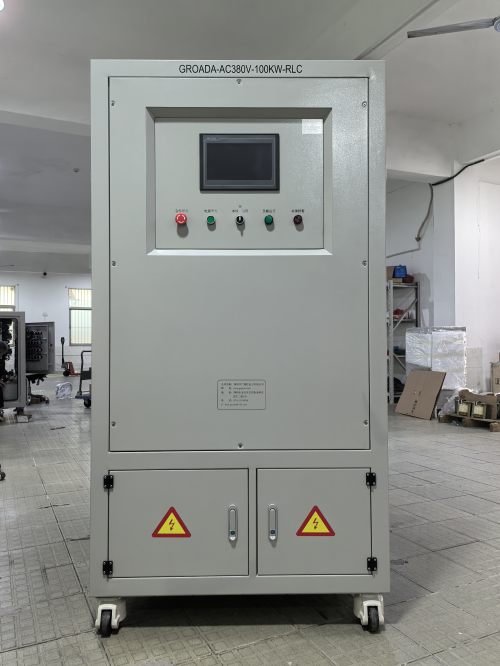
Safety is paramount—load banks must meet CE, UL, or CCC certifications depending on the market. Features such as grounding terminals, short-circuit protection, E-stop buttons, and overvoltage/undervoltage detection help prevent damage to both equipment and personnel. A typical unit may weigh between 100 kg and 3,000 kg, with IP54 or higher enclosure ratings for industrial environments.
An anonymized case study from a hospital backup generator test showed that using a 500 kW resistive load bank revealed inadequate cooling airflow in the engine compartment—an issue corrected before a critical outage. Another simulated example involving a wind farm grid connection test demonstrated that a 1 MW resistive load bank validated the inverters’ ability to handle full-load conditions safely over 24 hours, confirming compliance with utility interconnection requirements.
In summary, resistive load banks are not just diagnostic tools—they are vital for ensuring power infrastructure resilience, especially in sectors like healthcare, data centers, and renewable energy. Proper selection, calibration, and regular maintenance based on manufacturer guidelines and industry standards (like IEC 61000-4-30) are crucial for reliable long-term operation.