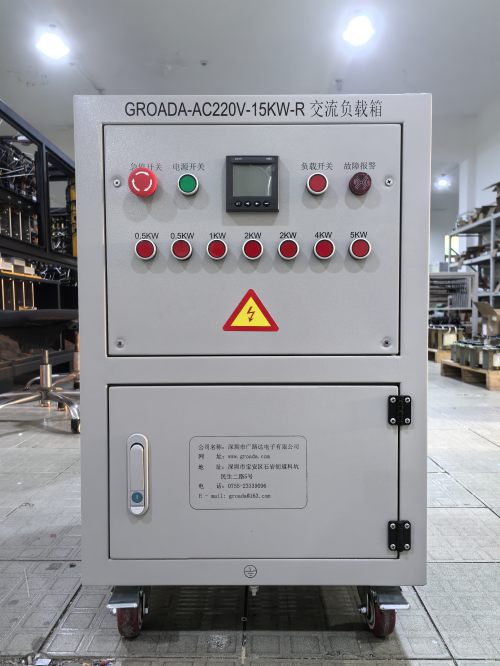
When testing generators, uninterruptible power supplies (UPS), or renewable energy systems like wind farms and microgrids, selecting the correct load bank is critical for ensuring performance, safety, and compliance. A load bank simulates real-world electrical loads to verify that a power source can handle its intended duty cycle under various conditions—such as full load, partial load, or emergency scenarios. There are four main types: resistive, reactive (inductive or capacitive), and combined RLC (resistive-inductive-capacitive) load banks. Resistive load banks are the most common, converting electrical energy into heat using precision resistors and are ideal for testing generator output capacity, voltage regulation, and cooling system efficiency. Reactive load banks introduce inductive or capacitive reactance to test power factor correction and excitation systems—essential for diesel or gas-powered generators used in industrial applications. For more complex validation, such as grid integration of solar or wind systems, an RLC load bank allows engineers to simulate dynamic load behavior including harmonic distortion and phase imbalance. Modern portable load banks often feature built-in digital controllers, remote monitoring via Ethernet or Wi-Fi, and automatic calibration checks—critical for maintaining accuracy over time. Safety features such as ground fault protection, over-temperature shutdown, and emergency stop buttons must be included to meet IEC 60034-1 and IEEE 1159 standards, which govern motor and power quality testing. Based on field data from multiple installations, reliable load banks should undergo calibration at least once per year using NIST-traceable equipment, with replacement of resistor packs every 3–5 years depending on usage intensity. Mechanical design also matters: units rated IP54 or higher offer dust and splash resistance for outdoor or harsh environments, while fork-lift pockets and lifting lugs improve portability. Case studies show that improper load selection—like using only a resistive bank for a generator with weak AVR control—can lead to unstable voltage or failure during actual load conditions. Engineers should always match load bank type, capacity, and control sophistication to the specific application, whether it's factory acceptance testing (FAT), commissioning, or routine maintenance.