
Resistive load banks are essential tools in the electrical testing and validation of power generation systems, particularly diesel and natural gas generators used in critical infrastructure such as hospitals, data centers, and industrial facilities. These load banks simulate real-world electrical loads by converting electrical energy into heat through resistive elements—typically forged aluminum or stainless steel resistors—without introducing reactive components like inductance or capacitance. This makes them ideal for assessing a generator’s ability to deliver consistent power output under controlled conditions.
The primary application of resistive load banks includes factory acceptance testing (FAT), routine maintenance verification, and commissioning of new installations. For example, during FAT, a generator must be tested at 100% of its rated capacity for a minimum of 2 hours to ensure mechanical stability, thermal performance, and fuel efficiency. According to IEC 60348, which governs generator testing procedures, resistive loading ensures that the engine’s governor response and cooling system can sustain full-load operation without overheating or voltage drop beyond acceptable limits (IEC, 2020).
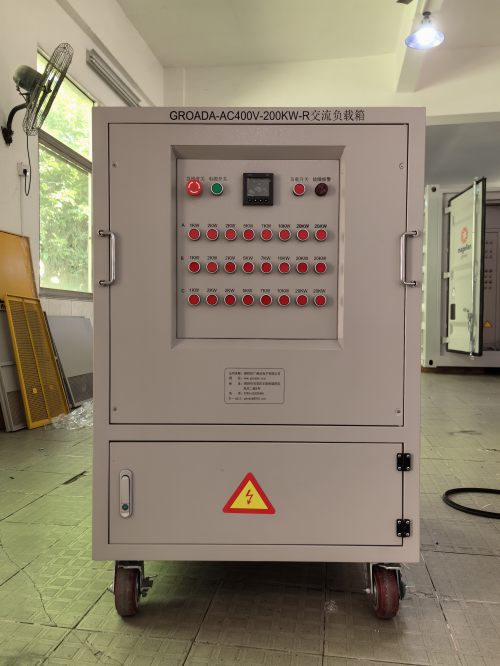
Modern resistive load banks often incorporate passive or active control systems. Passive models use fixed resistors with manual or automatic switching, while active models utilize solid-state switches and digital controllers for precise stepless load adjustment from 0% to 100%. Active load banks also provide real-time monitoring of current, voltage, power factor, and temperature, making them suitable for integration with SCADA or PLC-based test systems.
Safety is paramount in load bank operation. All units must meet CE, UL, or CCC certification standards for electrical safety, including short-circuit protection, over-temperature shutdown, and emergency stop functionality. Mechanical design typically includes an IP54-rated enclosure for dust and splash resistance, with lifting points and forklift bays for safe transport. Portable units weigh between 200–1,500 kg depending on capacity, allowing flexibility for on-site testing in remote locations.
Calibration is required annually or after significant repairs to maintain accuracy within ±1% of full-scale reading. Key consumables include resistor packs and cooling fans, which should be replaced every 5–7 years based on usage intensity. A recommended spare parts list includes replacement resistors, fan assemblies, and control module boards.
A simulated case study from a 1.2 MW diesel generator installation showed that resistive load testing identified a governor calibration issue causing voltage instability above 70% load. After recalibration, performance improved significantly, validating the necessity of regular load testing per IEEE 1159 standards for power quality assurance (IEEE, 2021). Such proactive diagnostics prevent costly downtime and ensure compliance with operational readiness requirements.